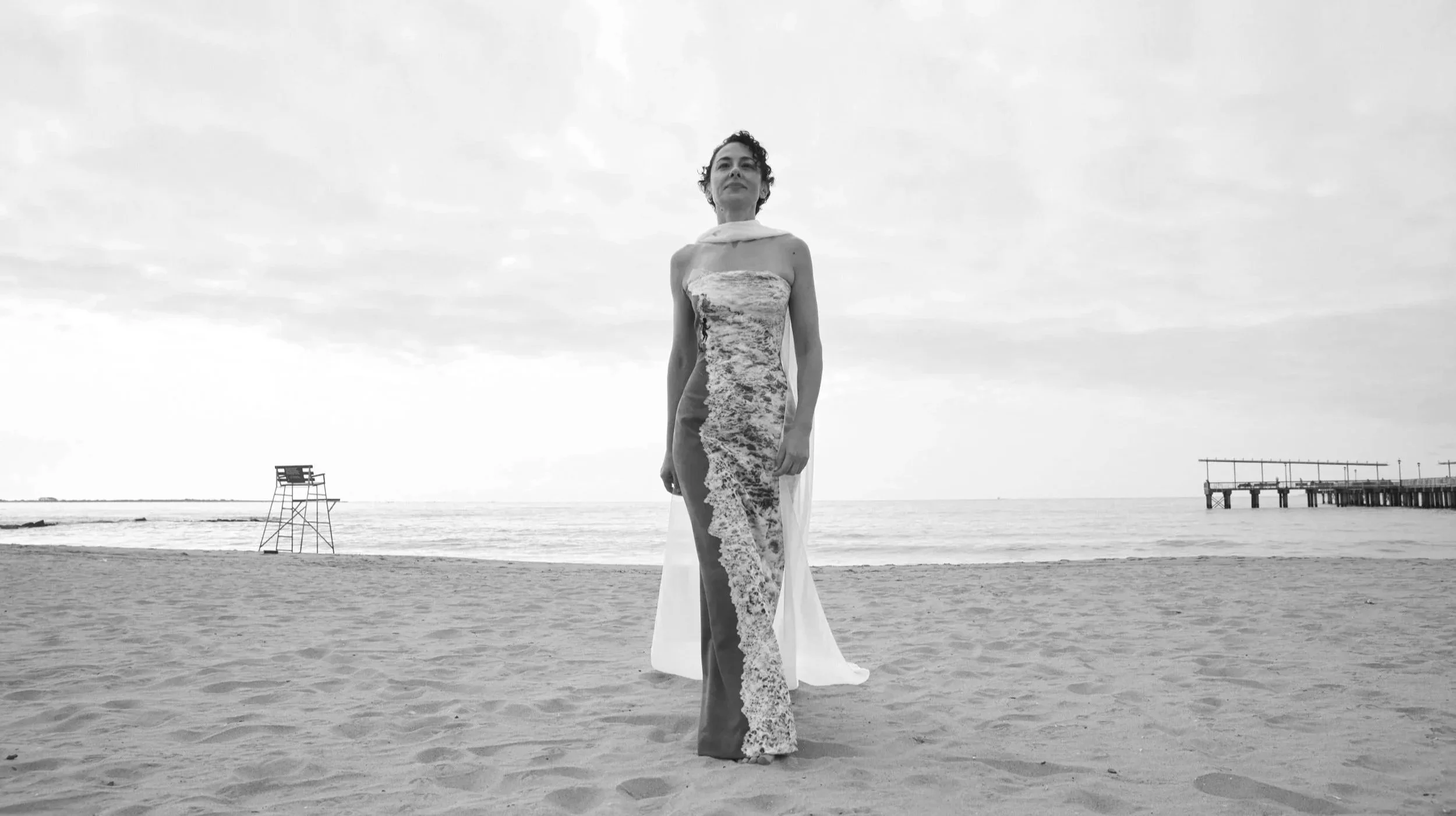
A moment captured on the beach,
translated into form,
and brought back to life by the sea.
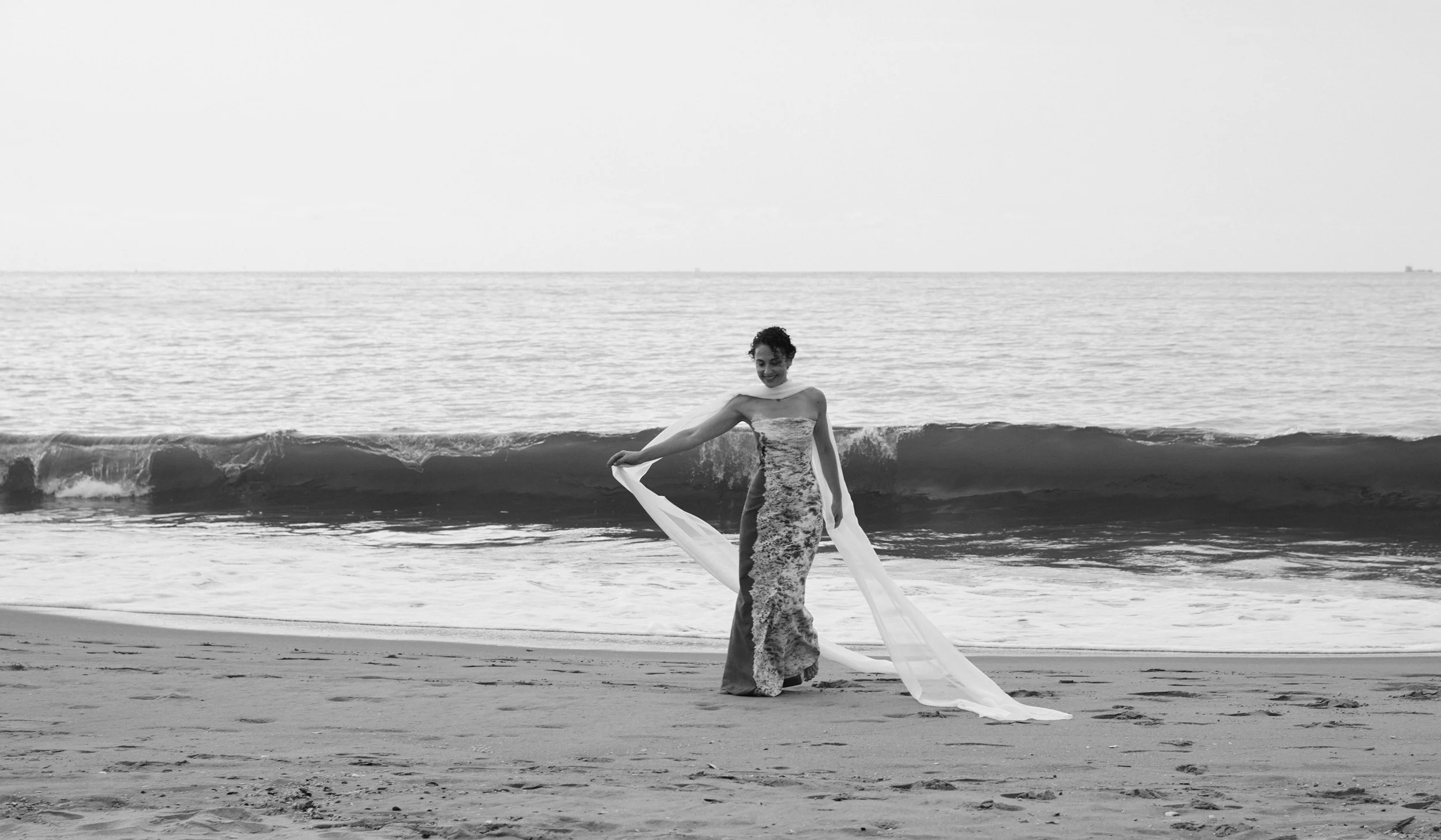
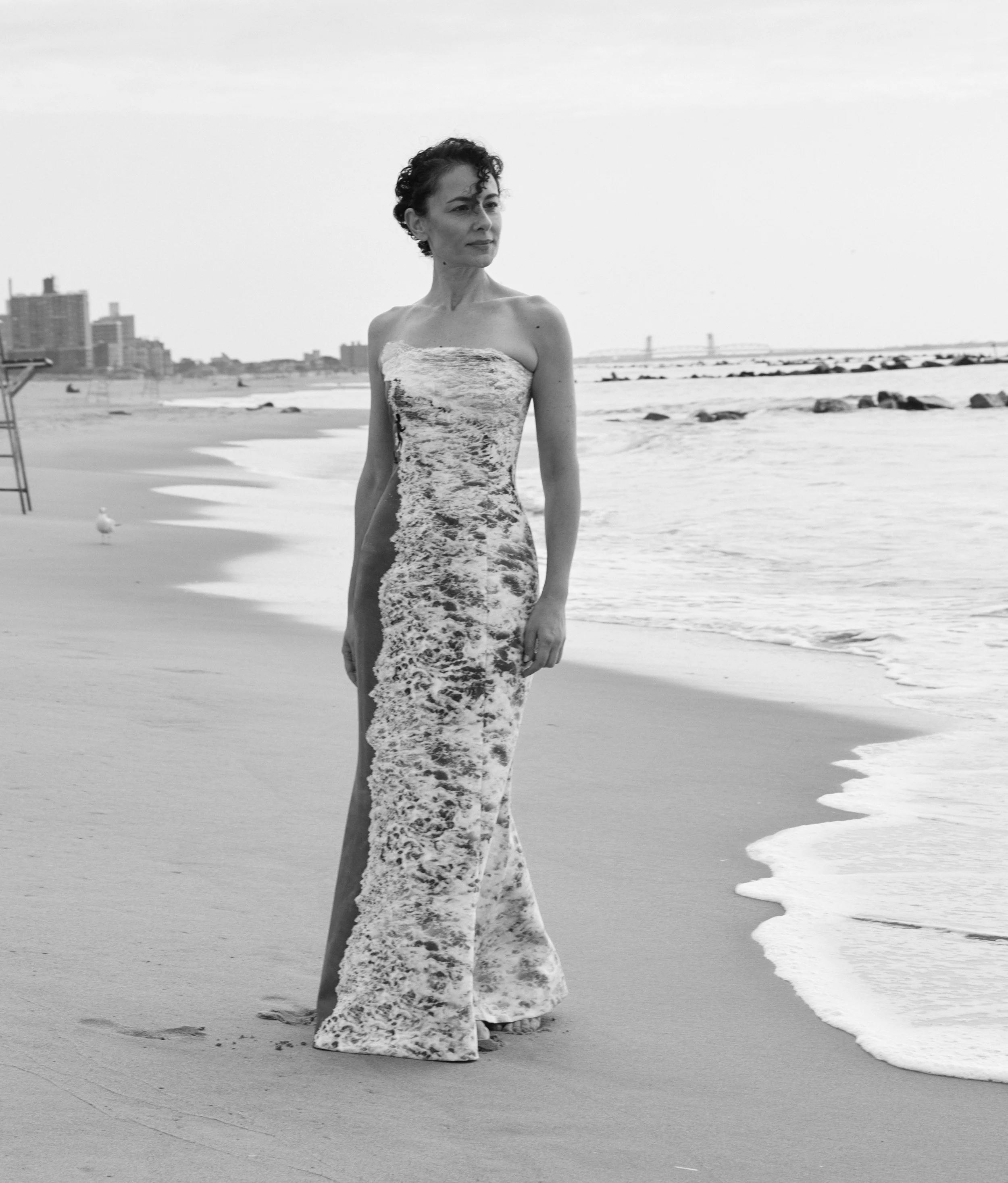
Memoria reflects
the quiet
strength of
returning —
where memory
connects who we
were with who
we are becoming.
Memoria
The Sea Remembers What We Leave Behind
Unlike the bridges, the towers, the spirals,
the sea does not rise.
It opens.
One reason I chose New York was because it touches water.
Not the Mediterranean of my childhood, but enough ocean to quiet a homesick body.
Coney Island became my refuge.
When Manhattan felt relentless, I would go where the skyline dissolves into the horizon.
There, the city loosens its grip.
There, ambition softens.
I did not cross the Atlantic by ship.
But I crossed it all the same.
Sometimes I sit before the water and wonder:
Did I do the right thing?
Did I mistake distance for destiny?
The ocean never answers.
It only moves.
And in its movement, I remember.
I walk the boardwalk between Brighton and Coney Island, breathing salt into my lungs.
On the pier, fishermen stand in patient silence. Below, children run toward waves and retreat shrieking with joy.
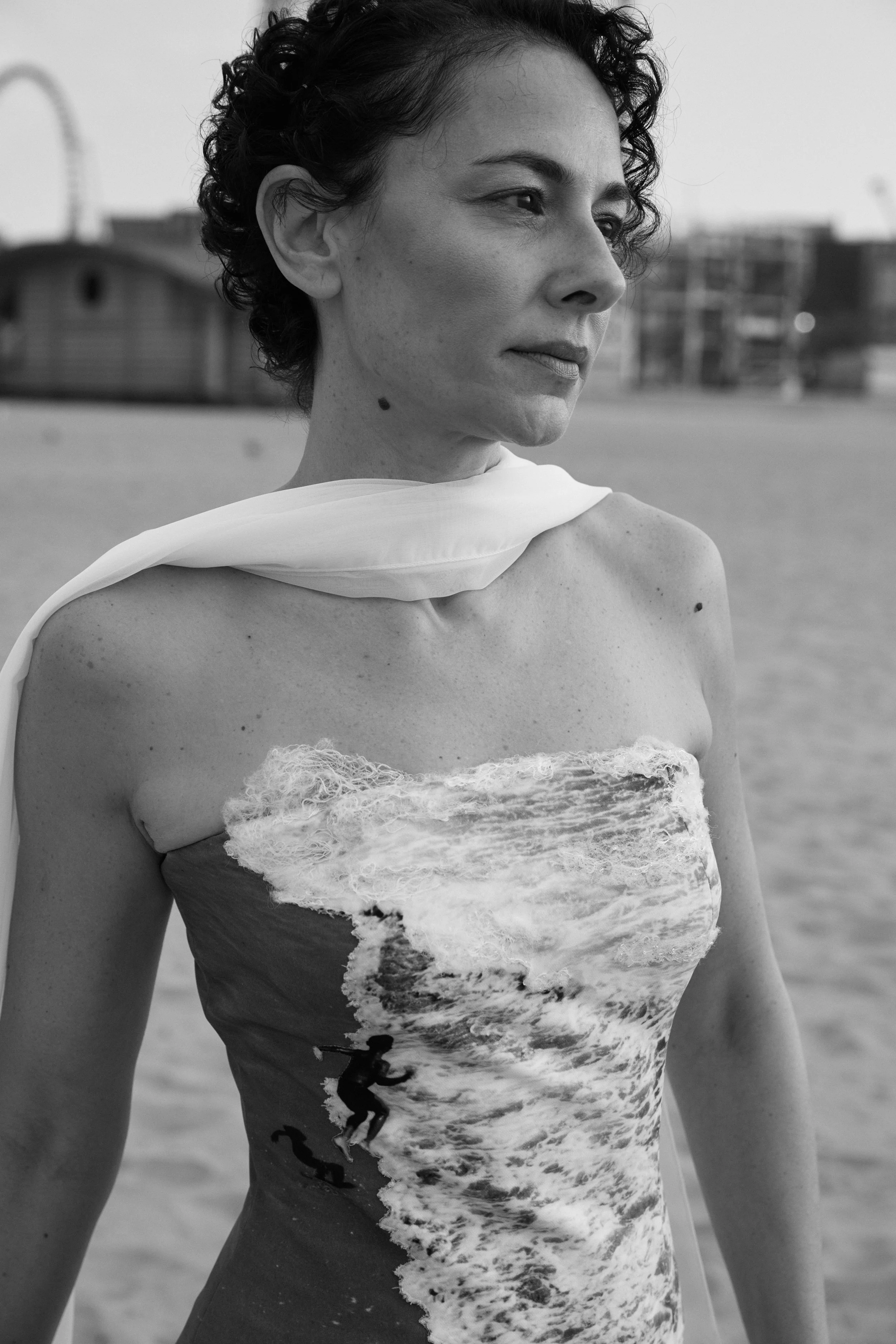
Through my lens, I captured a boy mid-leap, skin glistening, shadow stretched behind him. He jumped just as the wave reached for his legs.
In that instant, I saw myself, the girl I was before I understood what it meant to leave.
That photograph became Memoria.
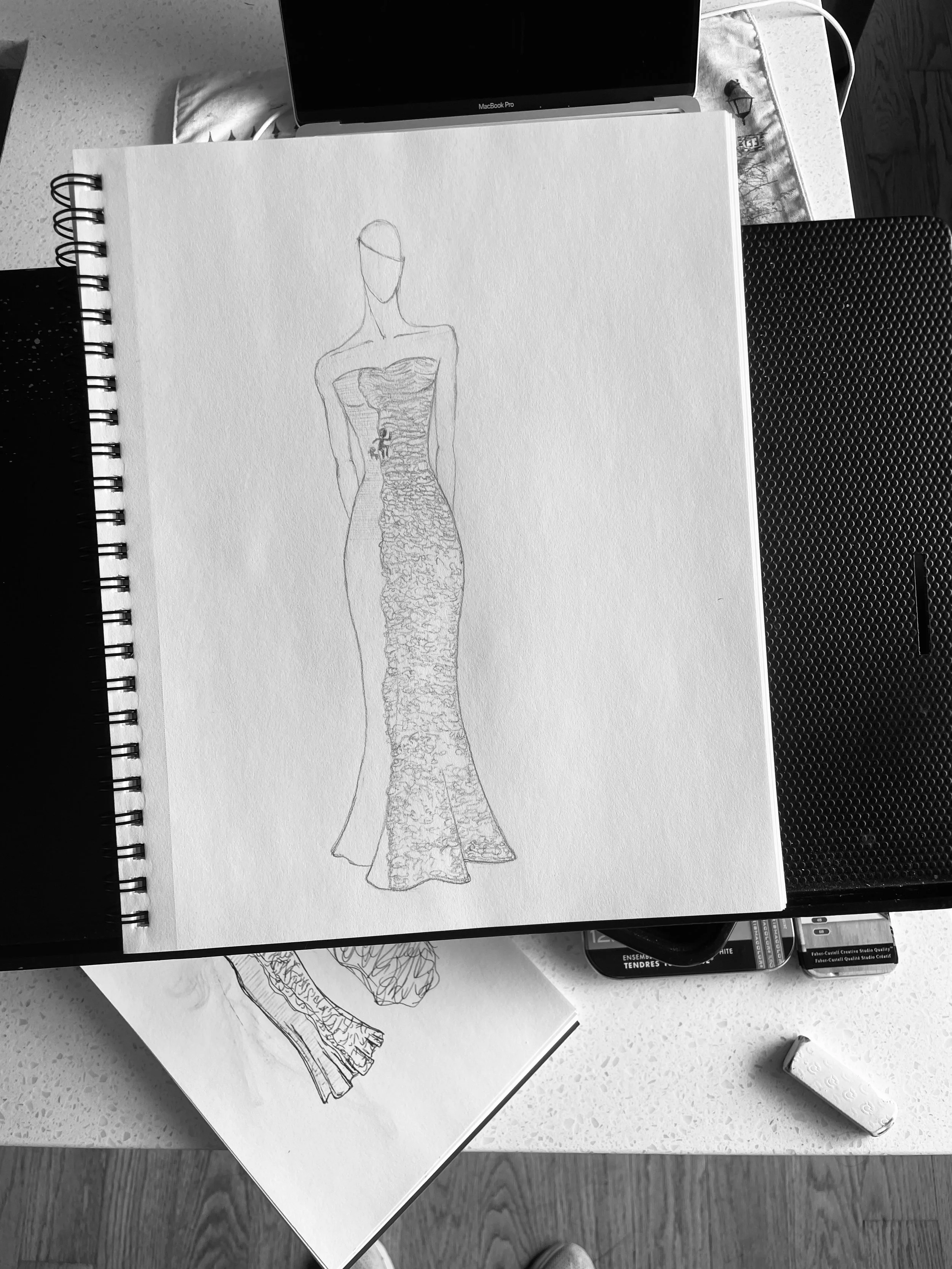
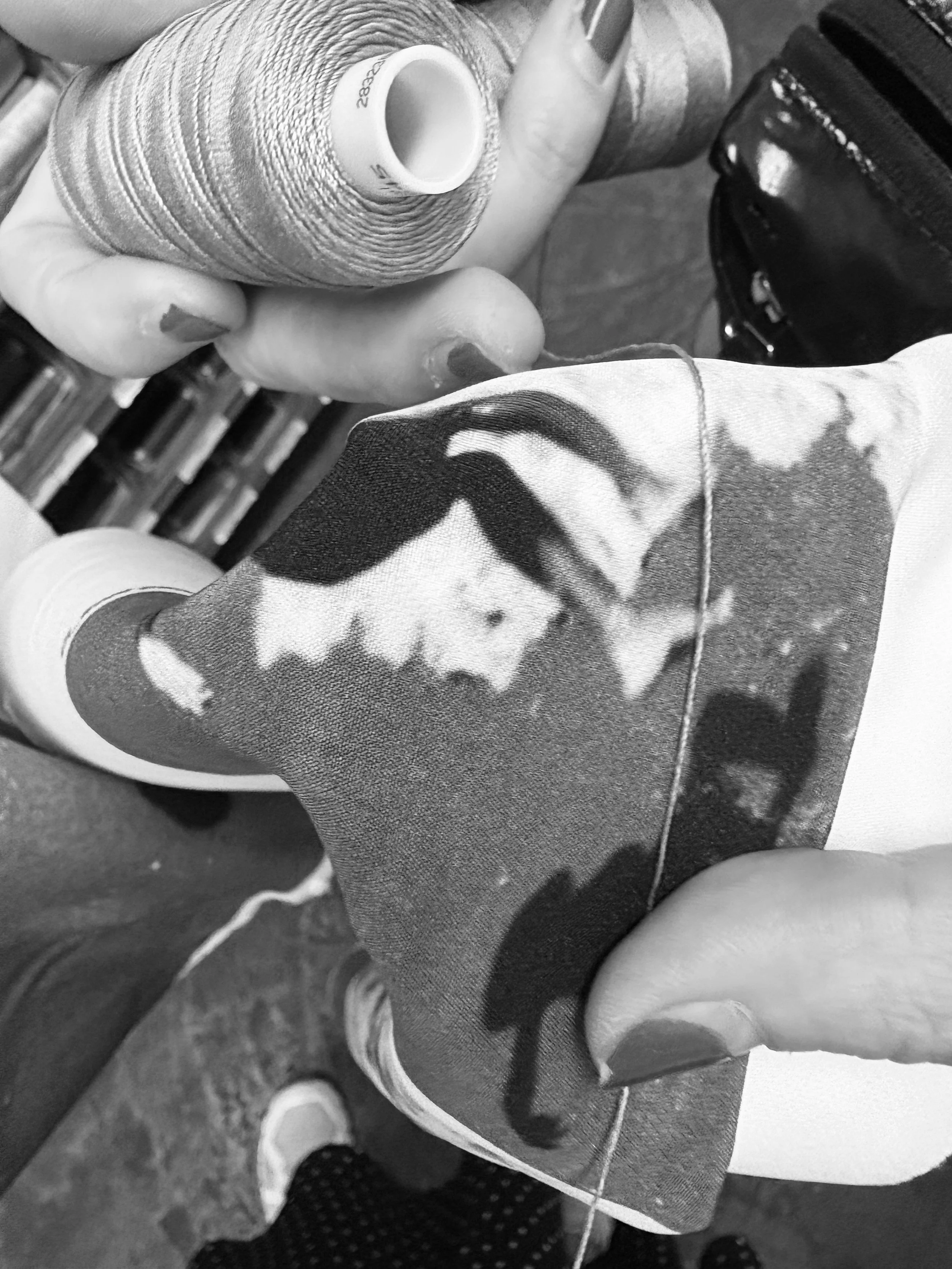
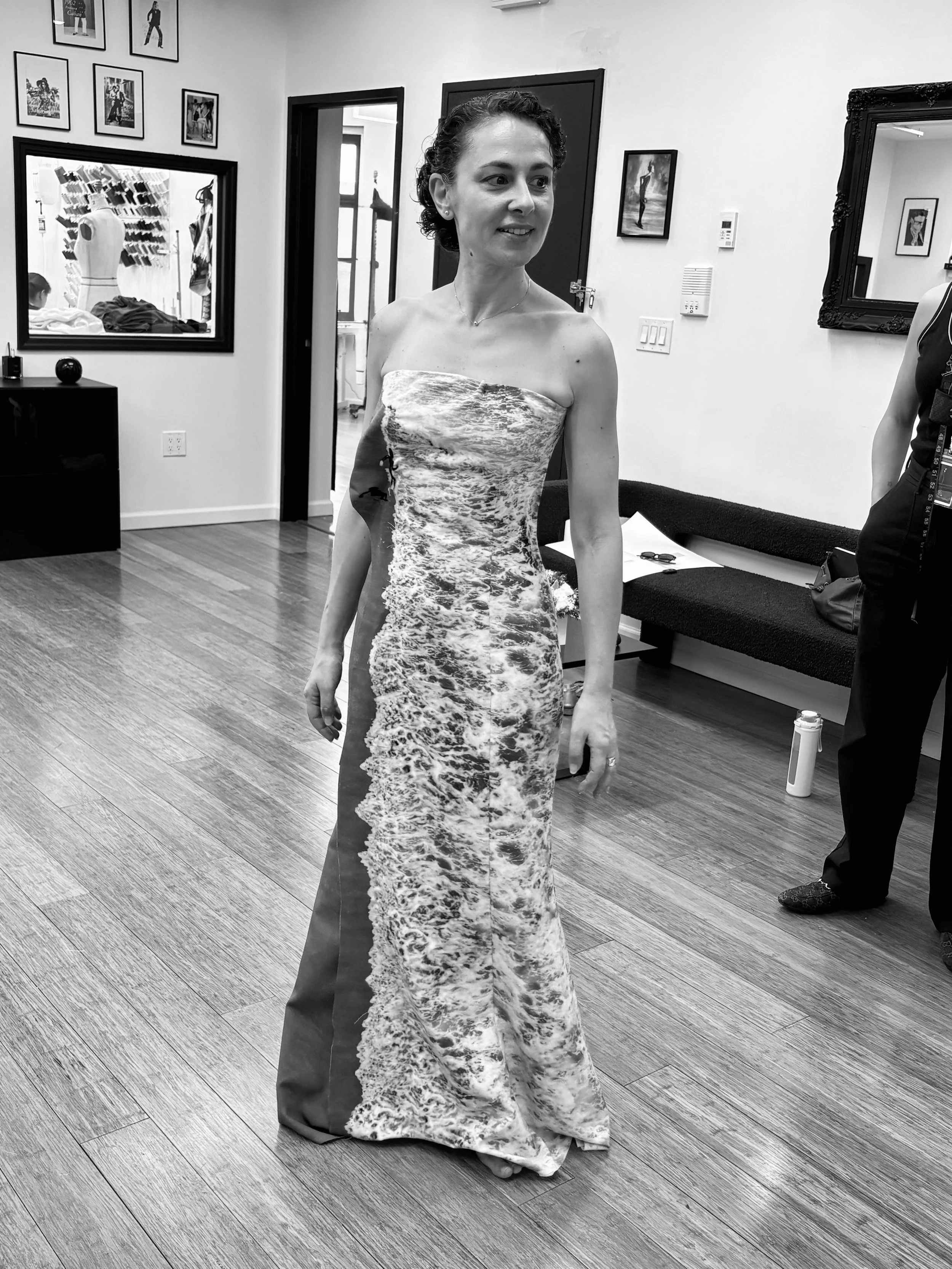
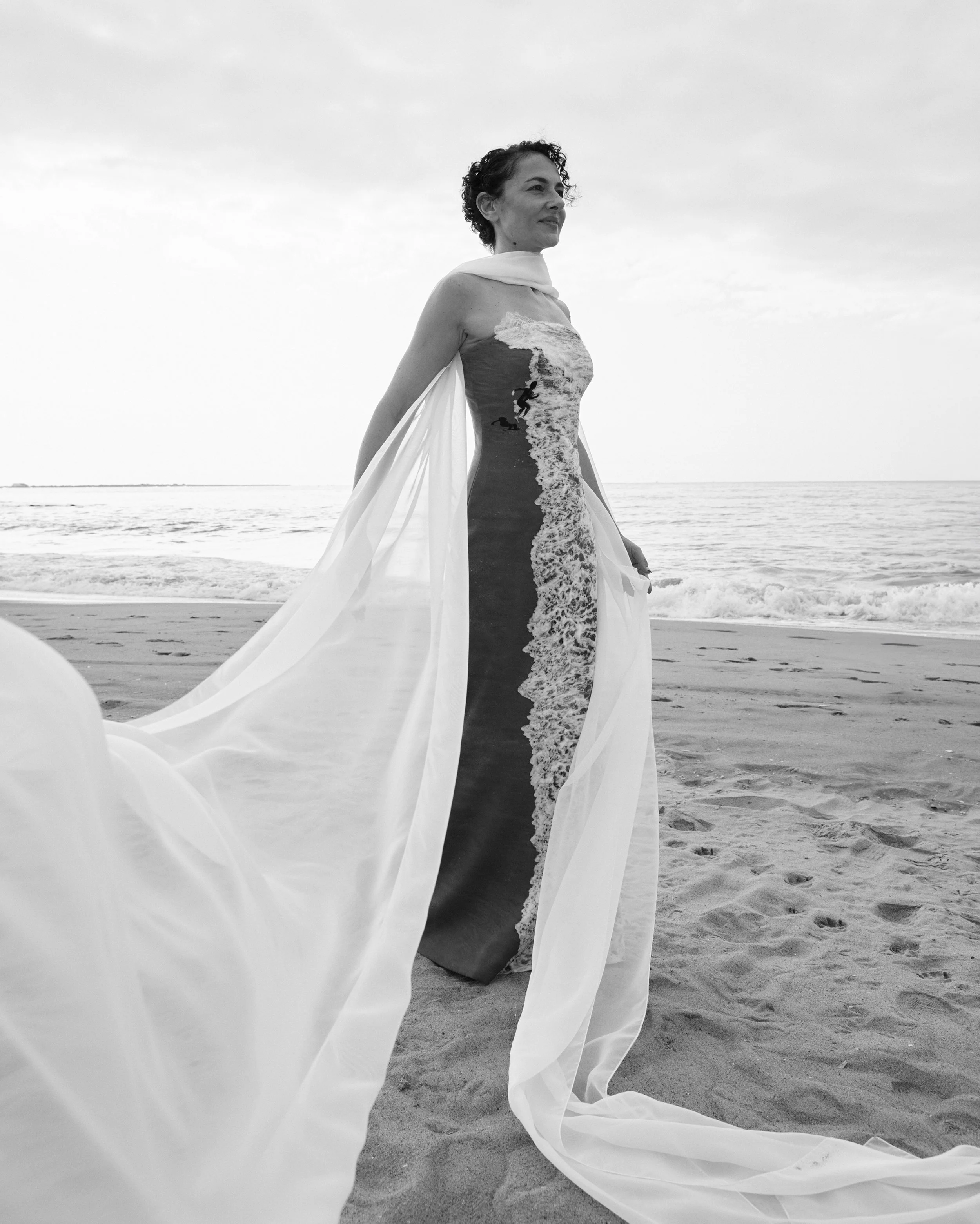
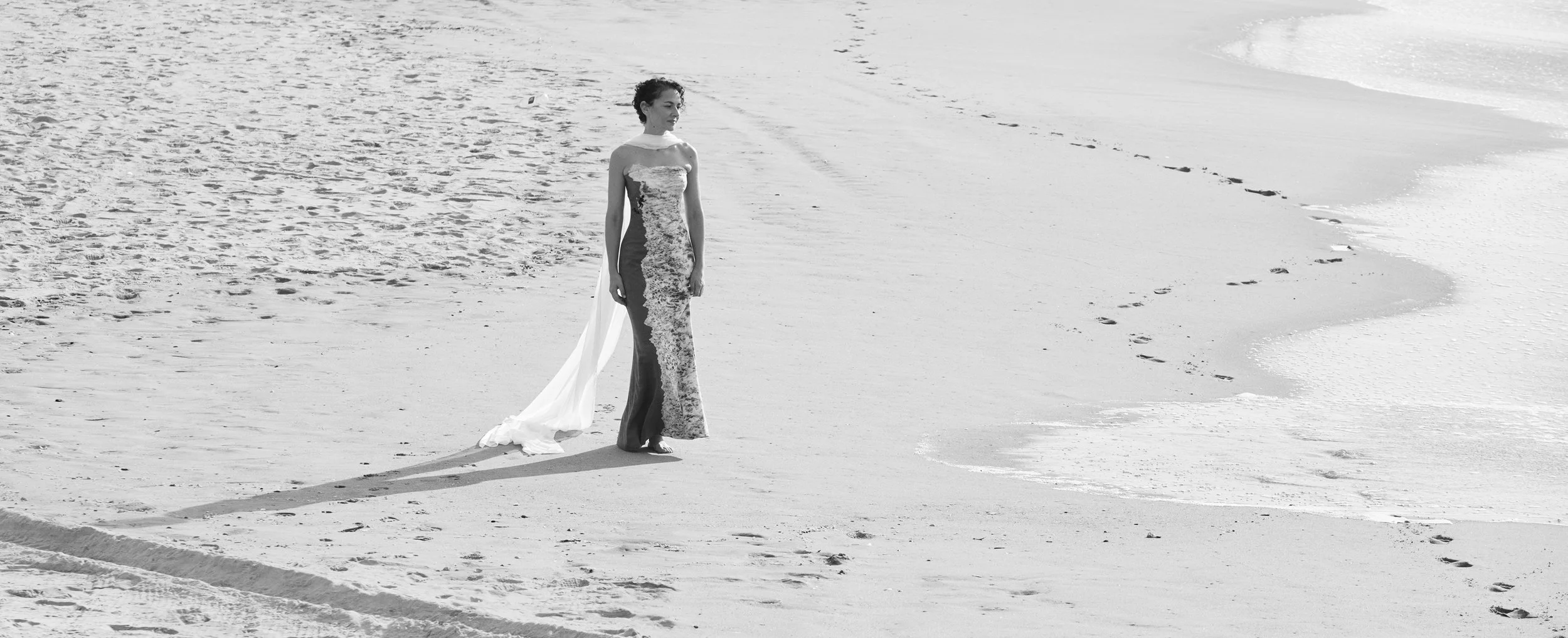
The dress falls long and strapless, cut to move like a tide against skin. Seven panels wrap the shoreline around my body so sea and sand do not fracture at the seams. The surfline falls asymmetrically, like a wave collapsing over sand. Its edges were cut and hand-finished to fray softly, foam dissolving into shore.
Cotton lifts the printed surf into texture. Foam extends beyond the edge of the dress and onto my bare chest.
The boy appears at my chest. His shadow travels along my side.
The day came to embody Memoria.
We arrived at the beach at 7am, before the crowds.
Makeup done in the open booth of the car, wind already in my curls.
When I stepped barefoot onto the sand, something shifted.
The sea did not feel distant, it felt familiar. It filled me.
At first I walked slowly along the shoreline.
A seven-foot white chiffon scarf wrapped around my neck trailed behind me. I lifted it into the wind and it rose, weightless, translucent, like wings remembering how to open.
Then I felt the pull of the water and ran toward it. I teased the small waves, lifting the hem of the dress, laughing as they chased my feet.
For a moment, I was no longer the woman who had crossed an ocean.
I was simply a girl running toward it.he outer garment to form its skeletal framework, anchoring its shell through snaps and hidden stitching. A single armhole opens like an architectural void, a negative space through which the body emerges, stabilizing the structure as it tightens around the upper arm.
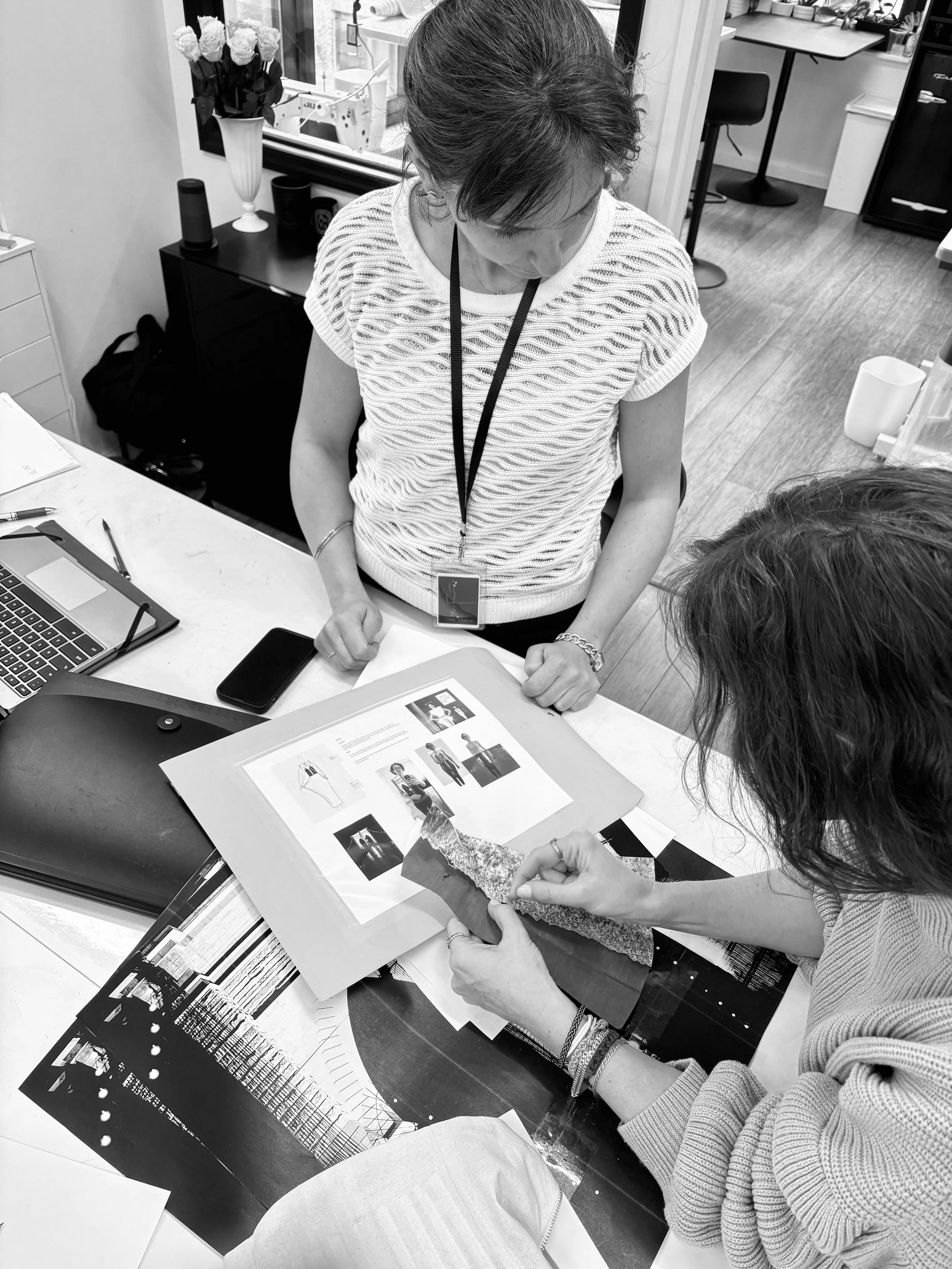
From paper,
to stitching the shoreline into form,
to moving with it by the sea.