Robe-ling
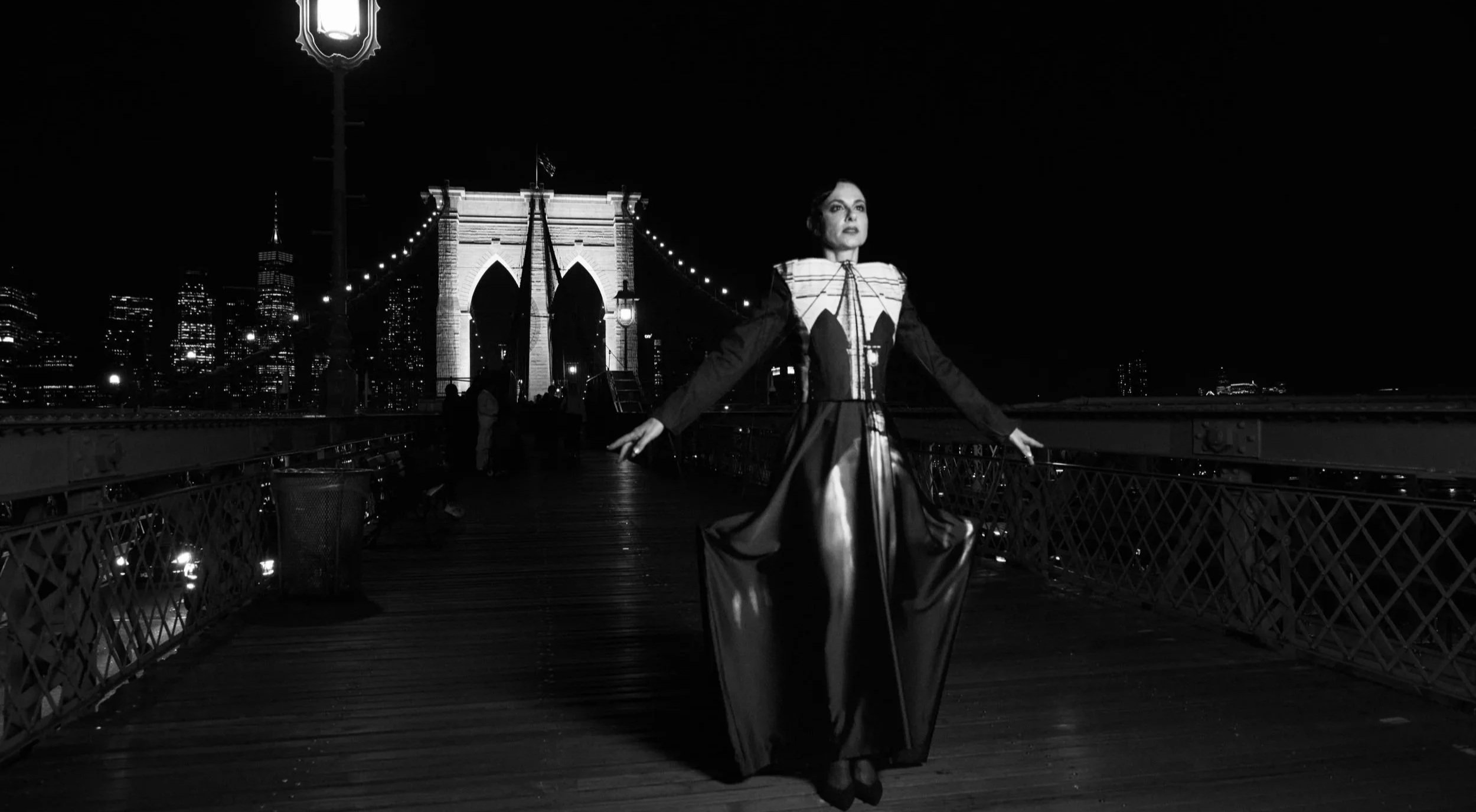
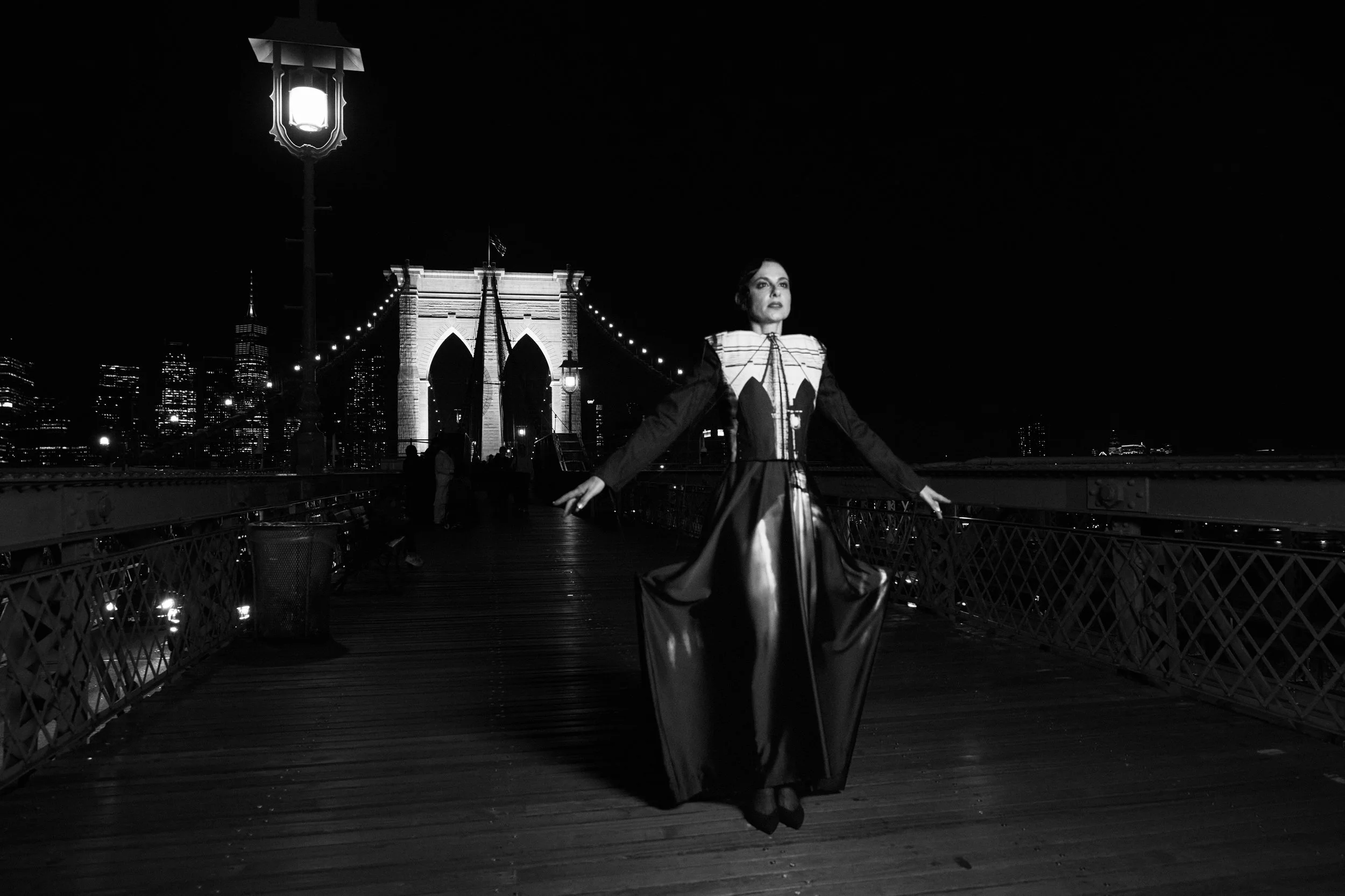
Designed and worn by a woman, Robe-ling was born out of love for the Brooklyn Bridge and the way it glows in full splendor at night.
From a nighttime photograph of the Brooklyn Bridge — to form, to embodiment.
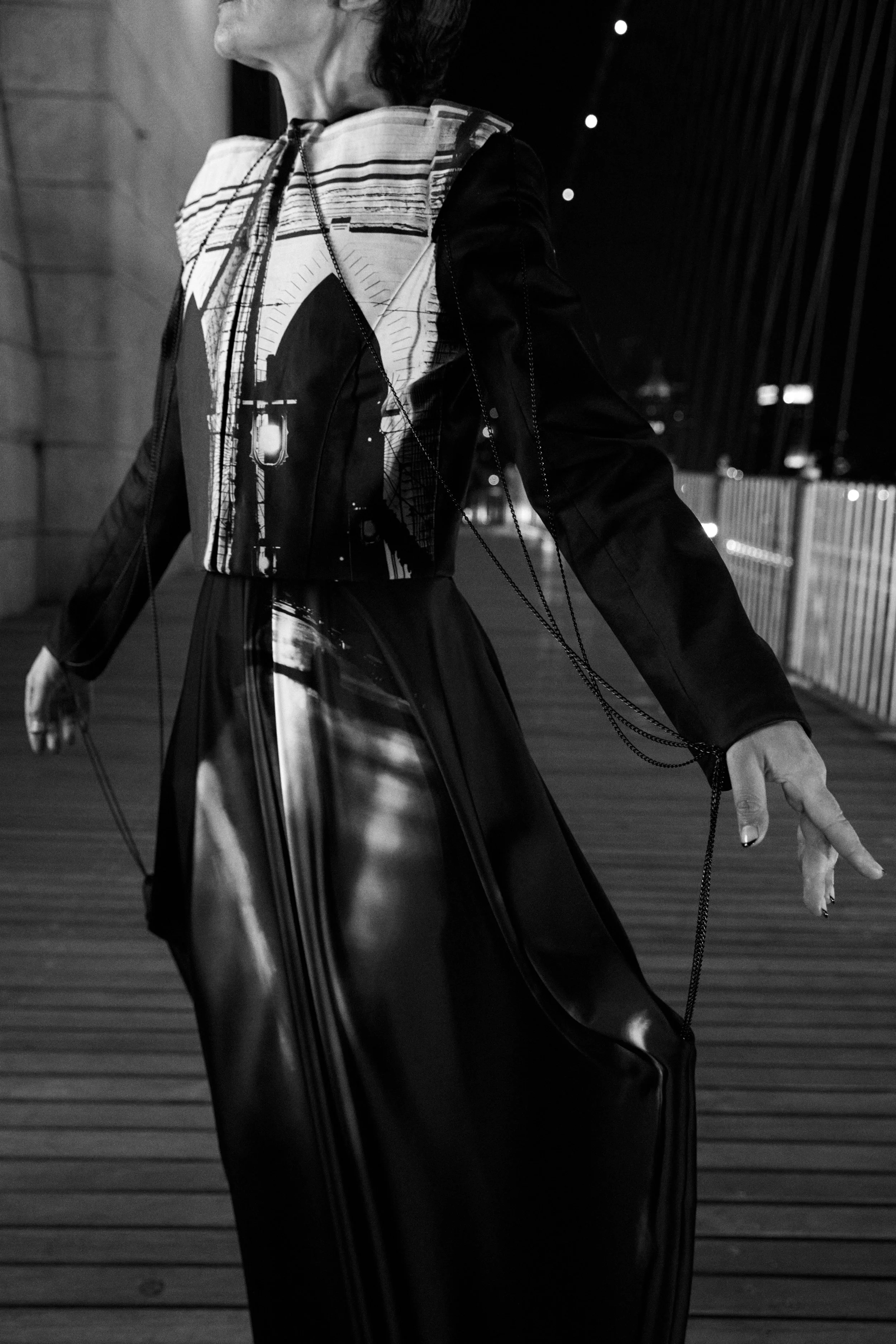
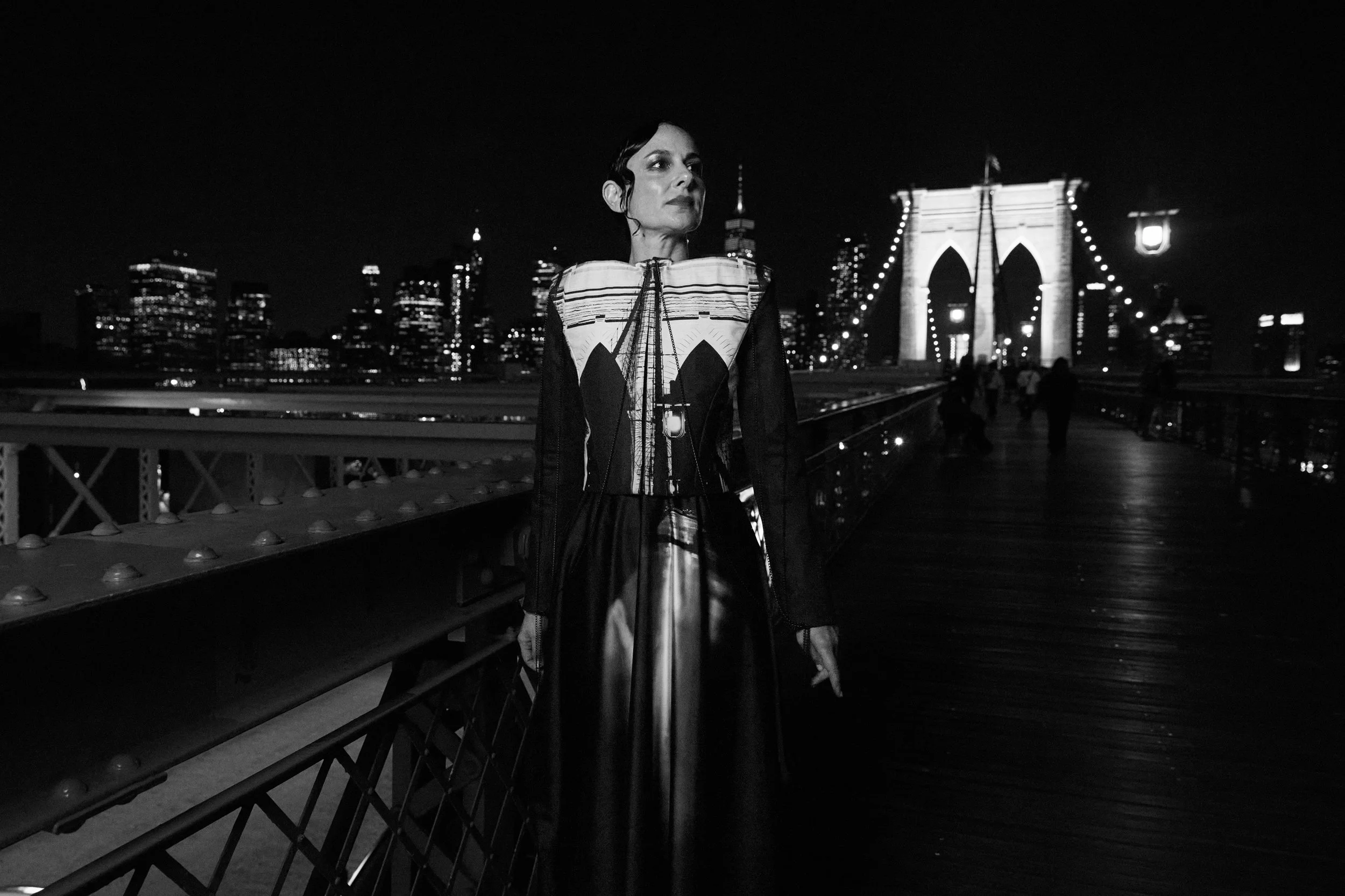
Designed and worn by a woman,
Robe-ling was born out of love for the
Bridge and the way it glows in full
splendor at night.
Robe-ling
How a Photograph, a Bridge, and a Woman Shaped a Couture Vision
Designed by a man, brought to life by a woman,
the Brooklyn Bridge was built to bear weight before serving the eye.
Designed and worn by a woman,
Robe-ling was born out of love for the Bridge and the way it glows in full splendor at night.
Neither John Roebling nor his son Washington lived to see the Bridge in its full glory. Yet at the center of its story was Emily Warren Roebling, who carried the project forward with unwavering faith in her father-in-law’s design and her husband’s research. She became the first to cross the Bridge, riding in a carriage with a rooster as a symbol of triumph. She was, in every sense, an engineer.
I kept returning to images I’d taken of the Bridge, one in particular. It was a rainy fall afternoon, the Bridge nearly empty, its stone arches reflected across the wet wooden boardwalk. A man with a red umbrella appeared beneath them and walked toward me. That was the moment I wanted to embody.
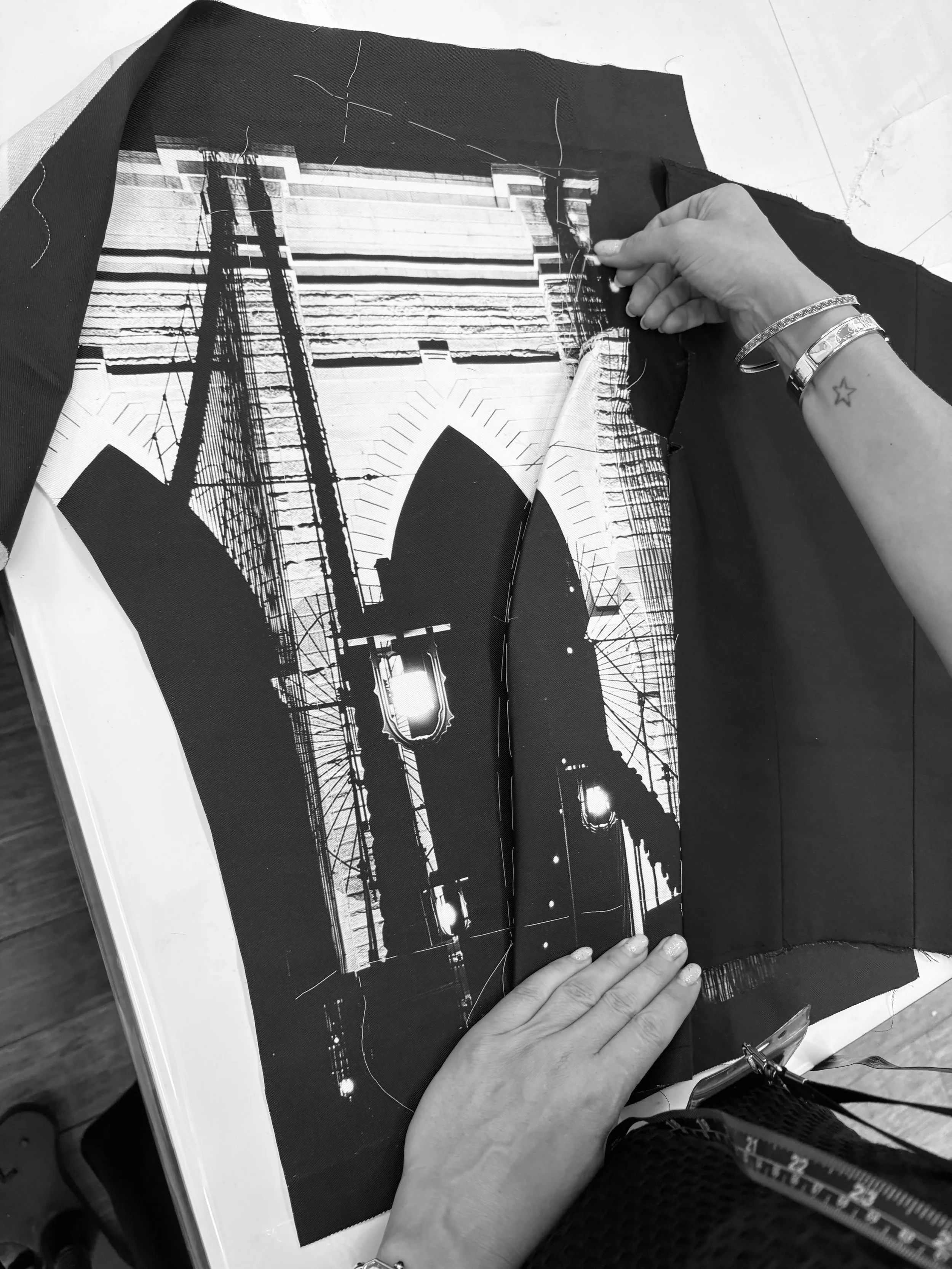
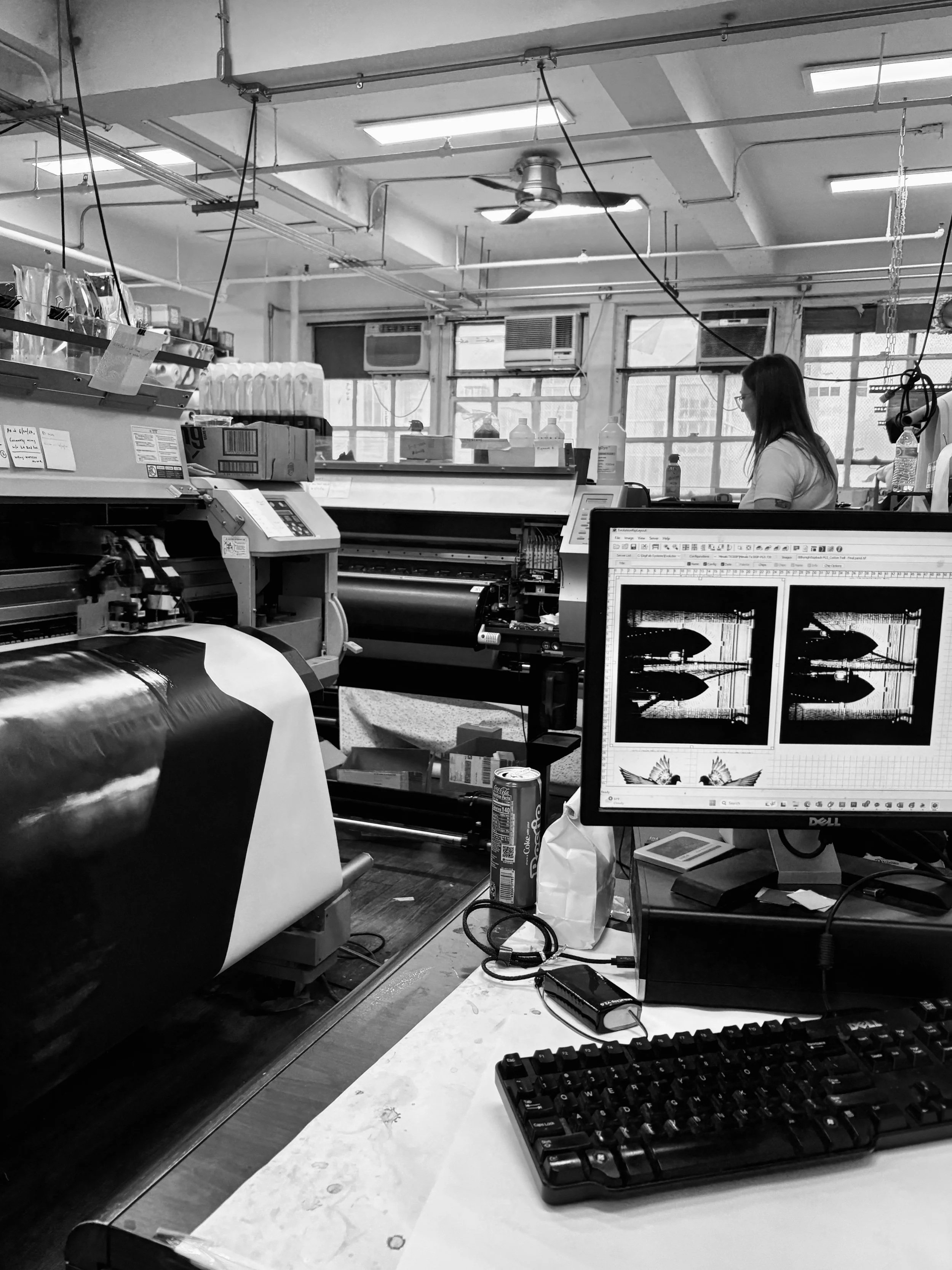
I translated the arches into a tailored jacket, the photograph printed across the front and sleeves, and imagined their reflections flowing onto a long, soft skirt. But aligning photograph and pattern seemed nearly impossible. Reluctantly, I abandoned both design and photo, but the Bridge kept calling me back.
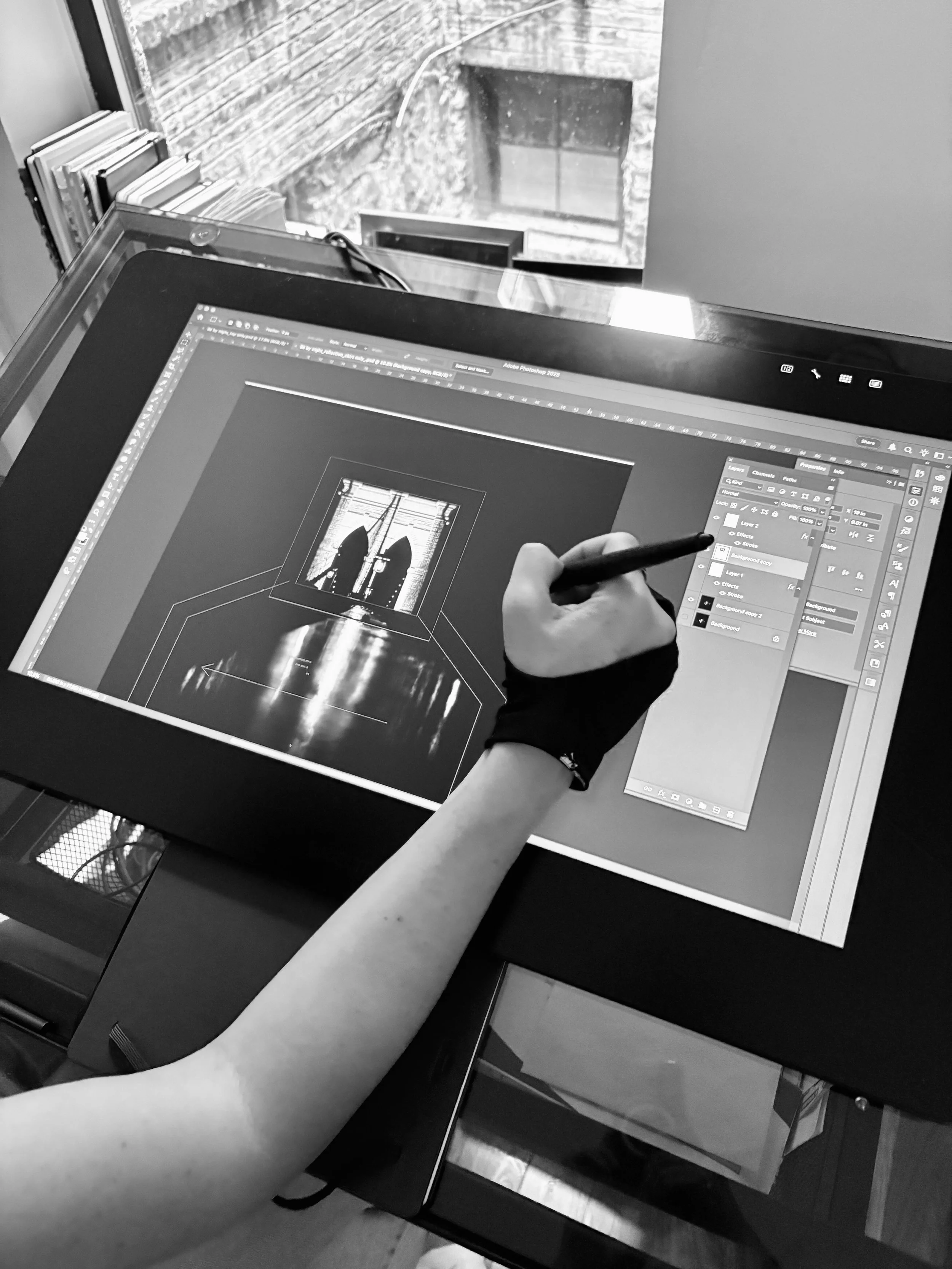
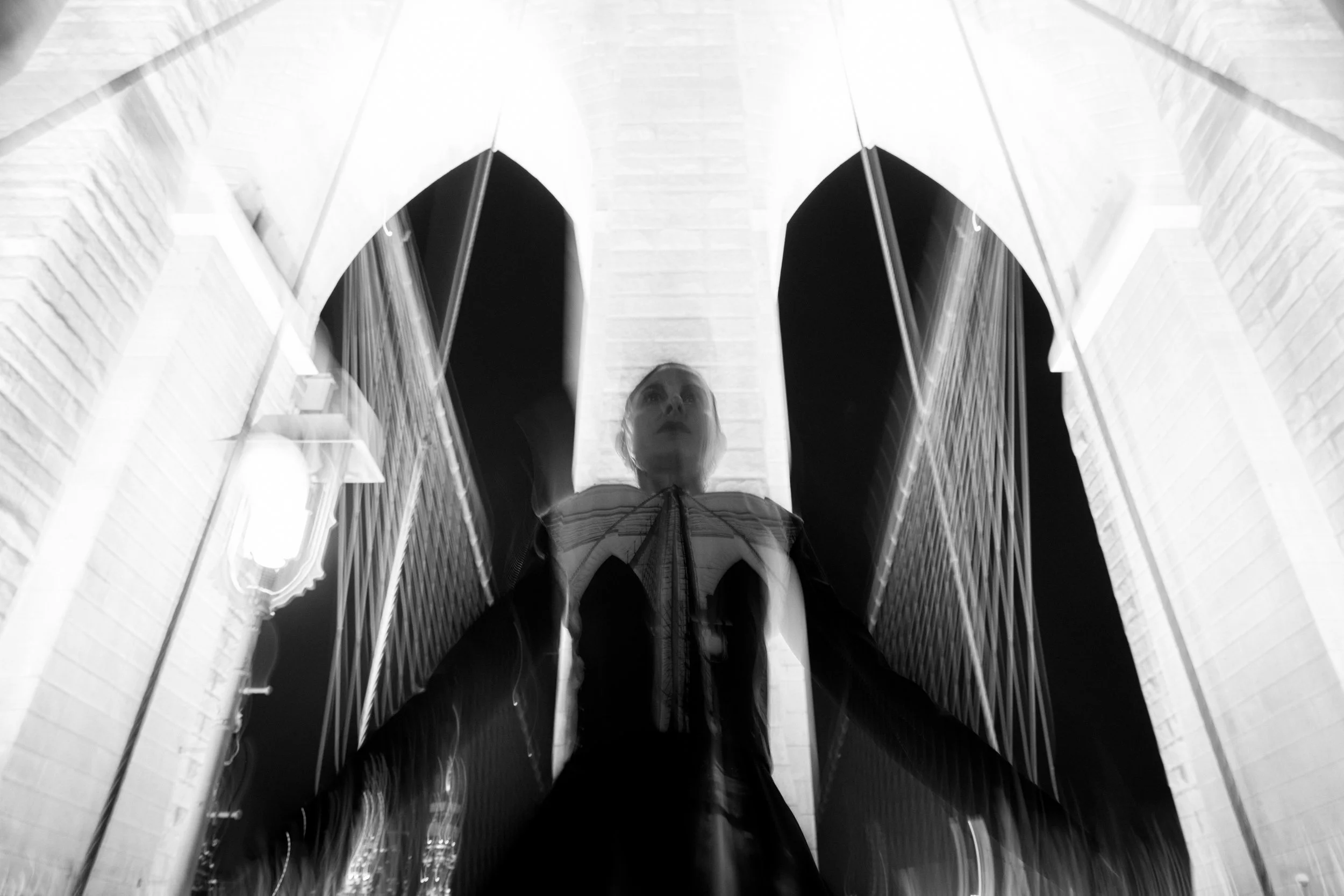
Searching more deeply in my portfolio, I found a black-and-white night photograph: the gothic archway glowing like a white tuxedo against the black sky. The shallow depth of field had melted the iron beams along the boardwalk into soft streaks of light, as if the Bridge itself were dissolving into water. Something in that image, its quiet force and loneliness, felt closer to the way I experienced the Bridge at night.
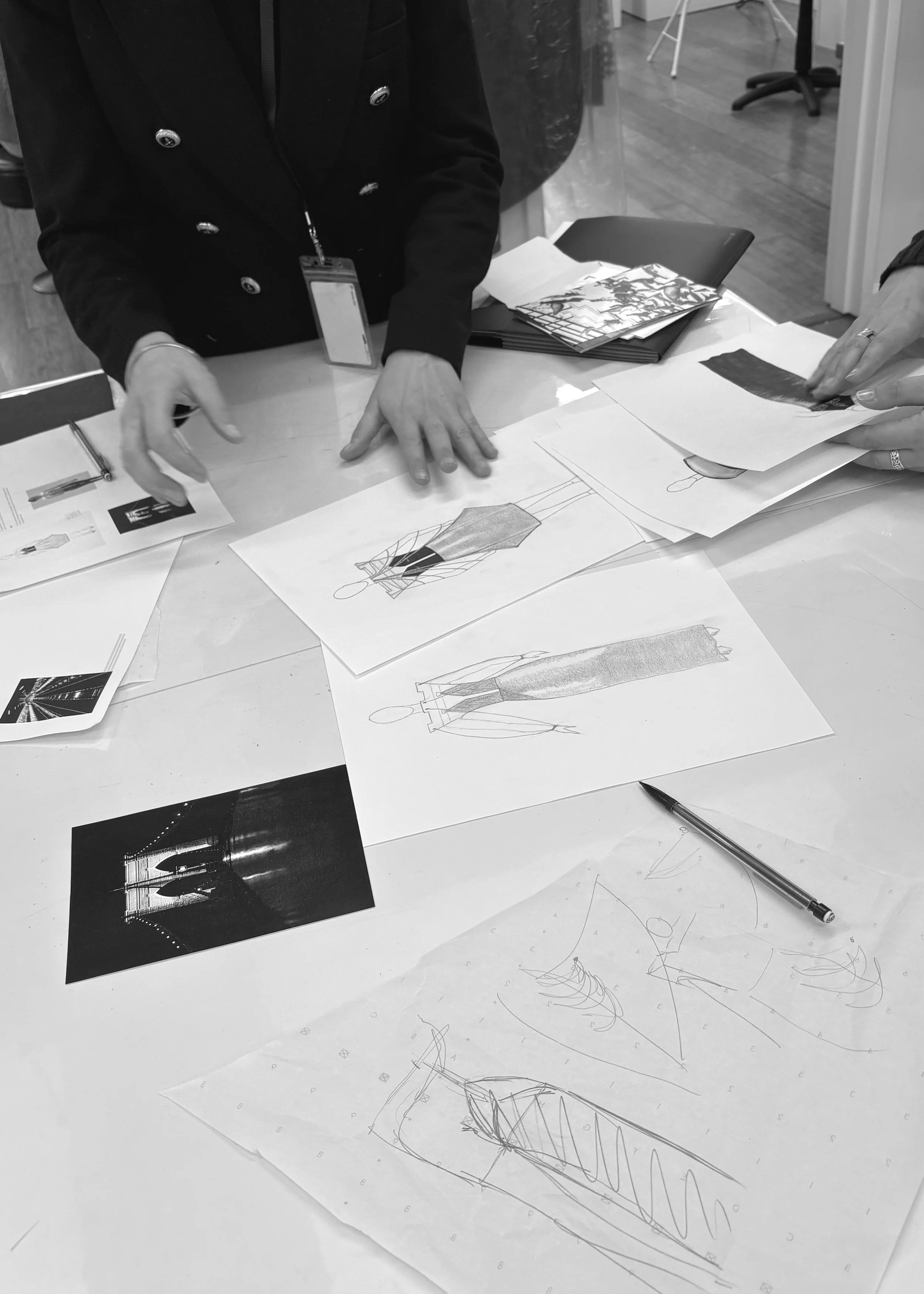
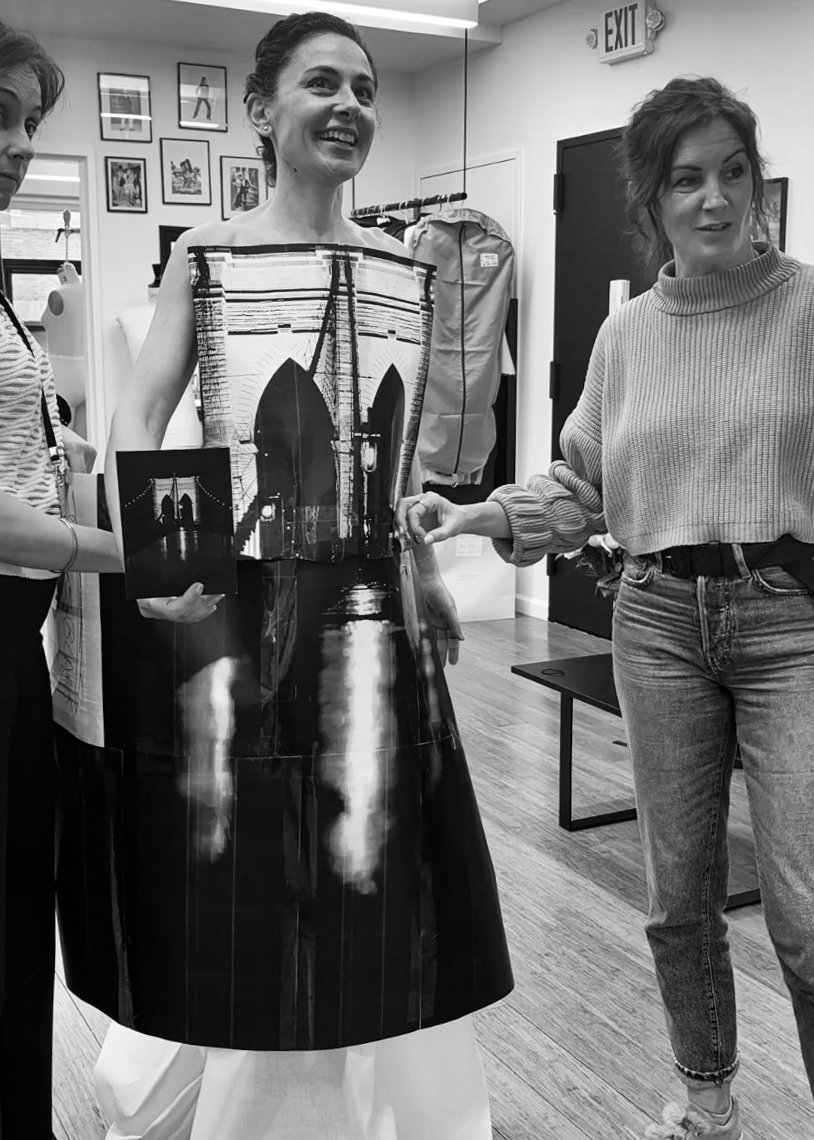
But translating that atmosphere into a garment proved difficult. How could I honor the power of that structure while shaping it for the female body? I printed the photograph at body scale, but after several fittings with Estelle, my dressmaker, and Sarah, my embellishment artist, I realized I looked less like a bridge and more like a cardboard box! The skirt was taking beautiful shape; the top continued to elude me.
Searching for an answer, I wandered through the Met and found myself before John Singer Sargent’s Belle Époque portrait Madame X, towering over me, her bustier formed by two black arches held in place by delicate chains over her shoulders.
I rushed home and began sketching again, this time using the negative space of the night to shape the Bridge rather than relying on the photograph itself.
Estelle created a fabric-and-boning prototype, but at the fitting it still didn’t click. It resembled armor. She picked up my earliest sketch, the tailored jacket, and said, “This is the one. This was always the one. This is how the Bridge should be represented.”
We decided to go for it.
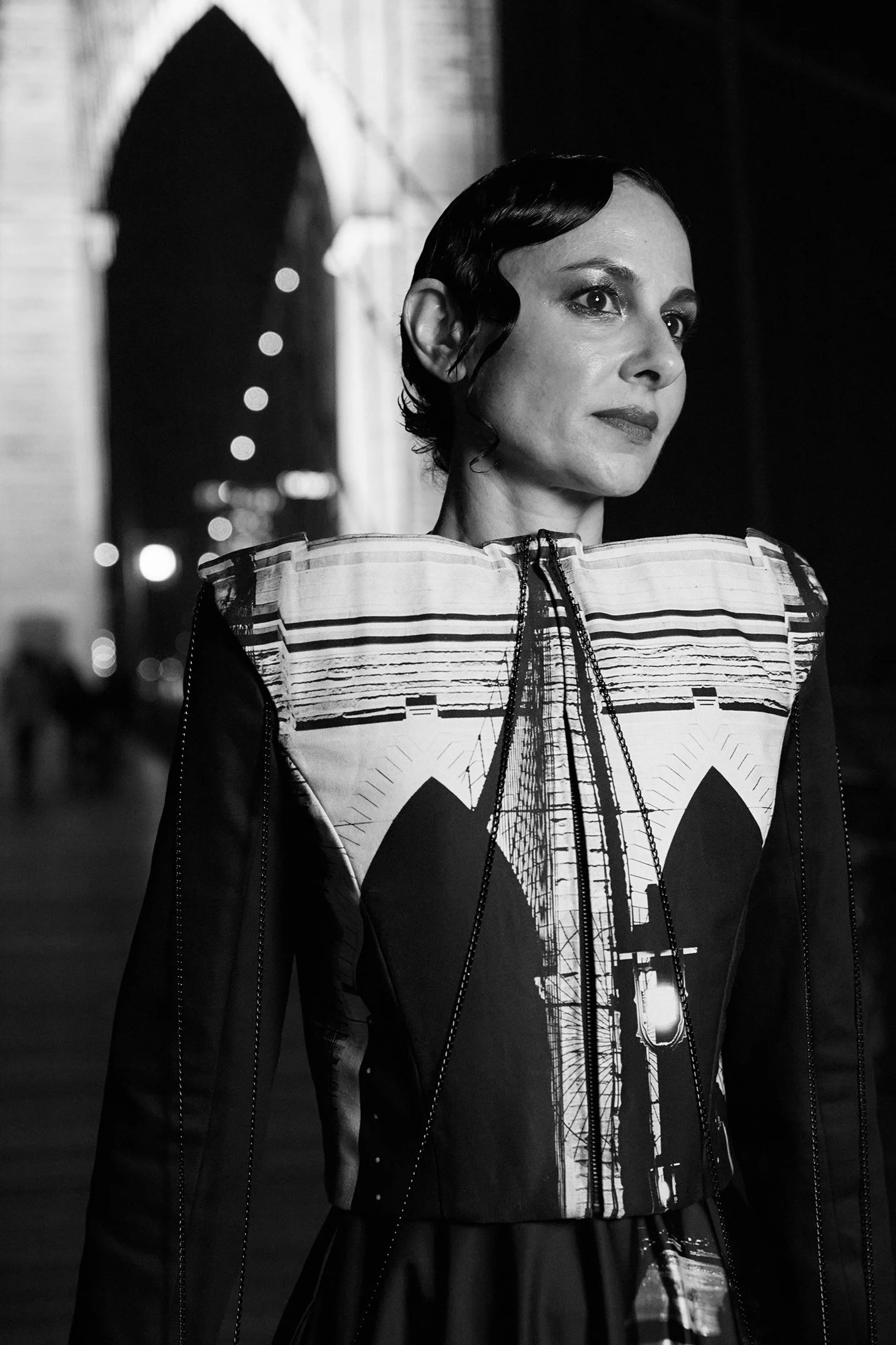
We returned to the original jacket, reusing the print from the first prototype so the archways fell across the bust and shoulders, surrounded by black denim echoing the night sky. Chains ran from collar to cuffs, while extensions lifted the skirt with my arms, tracing the triangular symmetry of the Bridge’s suspension cables.
A final fitting on Friday.
A night shoot on Monday.
Robe-ling was born.
This outfit became my greatest challenge, not only technically, but conceptually. The Bridge is an icon of masculine architecture: designed by men, claimed by men, yet brought to life by a woman. Transforming that masculine structure into a form that honored the female body became a feminist act in itself.
A masculine icon reimagined for the female body — a quiet act of transformation and strength, brought to life by a team of women.