Ziggura
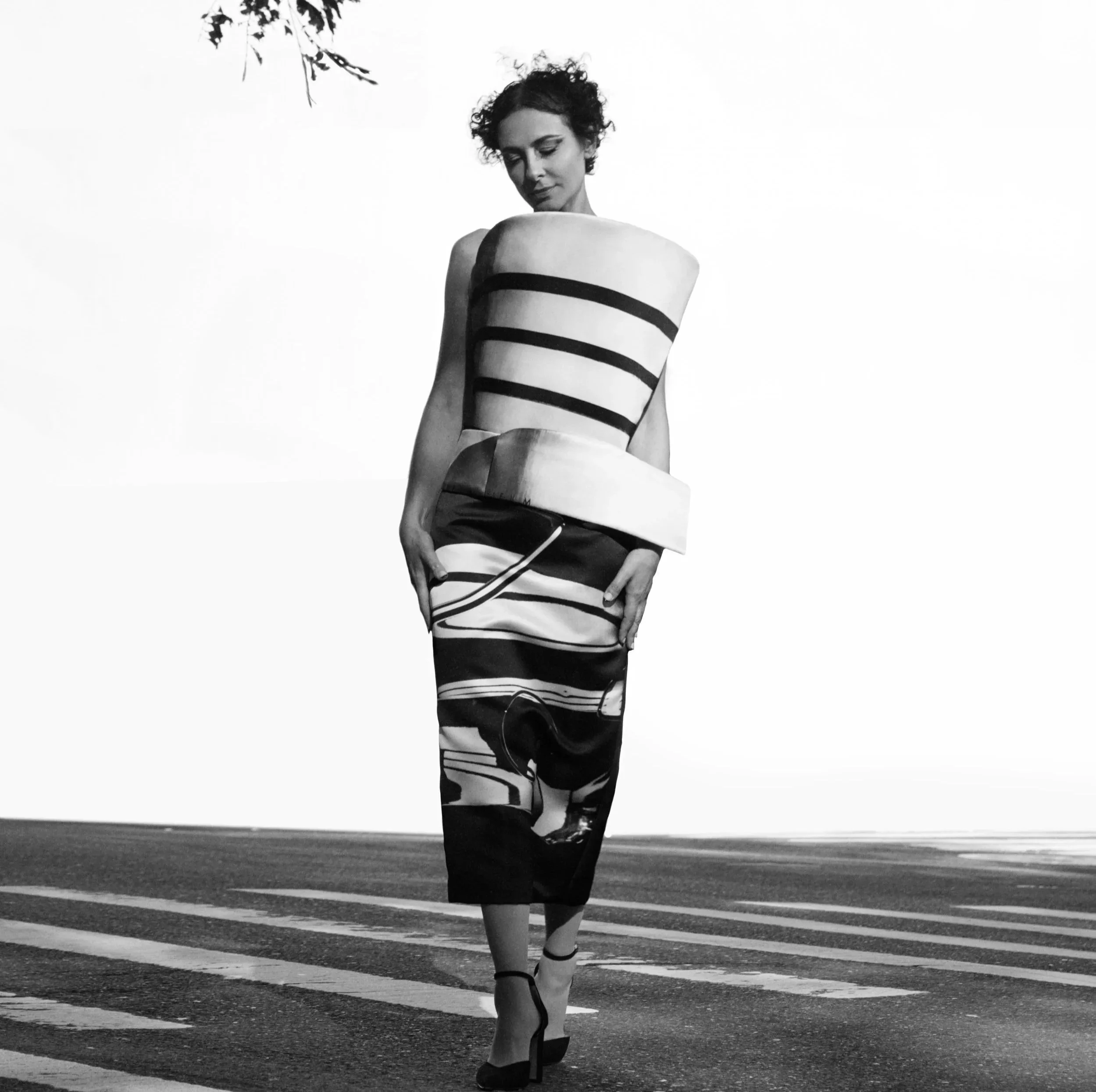
Inspired by the ancient ziggurat, Frank Lloyd Wright reimagined the pyramid as a spiraling cone. Ziggura translates this architecture into a wearable form.
A photo of the Guggenheim Museum and its reflection on a parked car across the street inspired this piece.
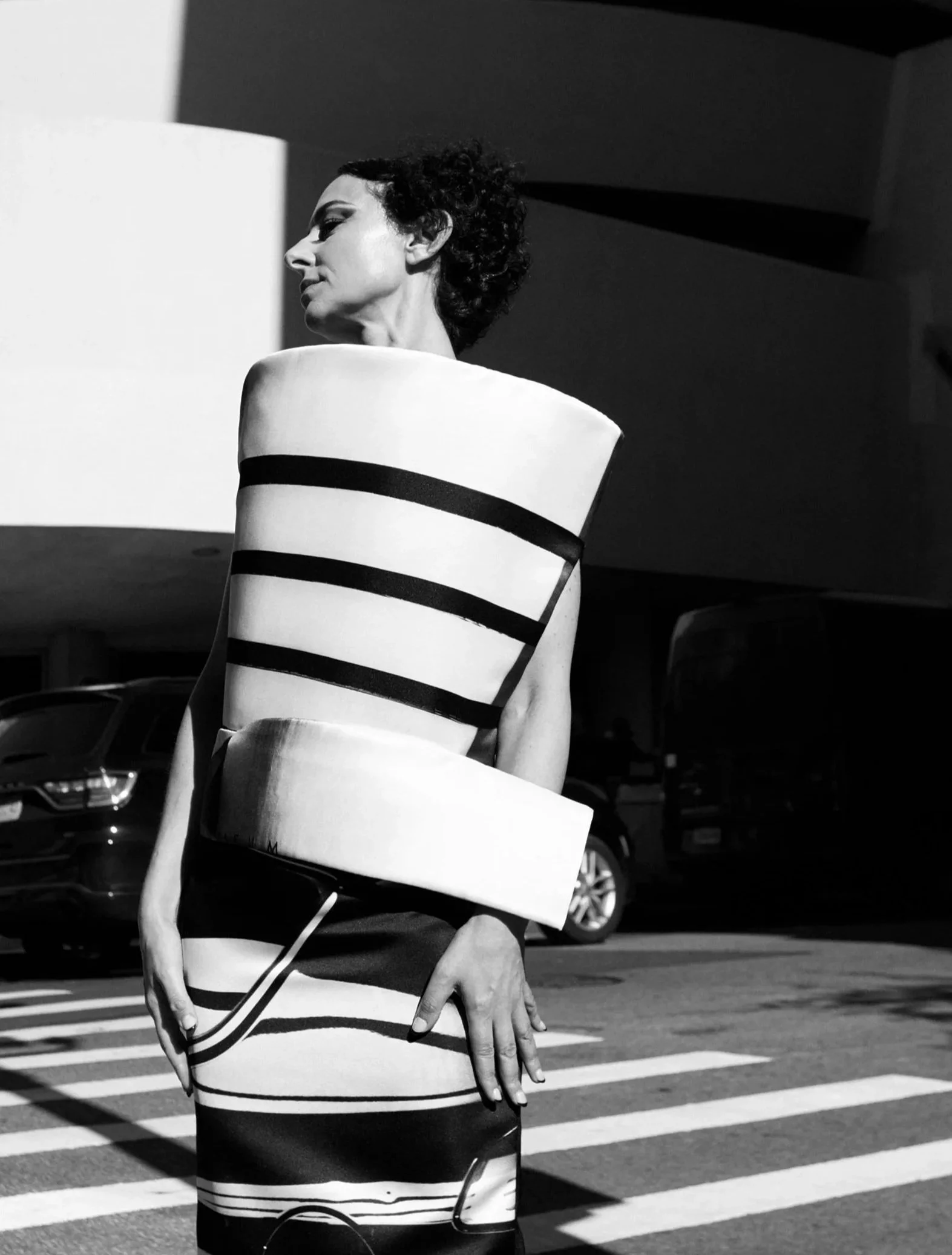
Architecture becomes image.
Image becomes couture.
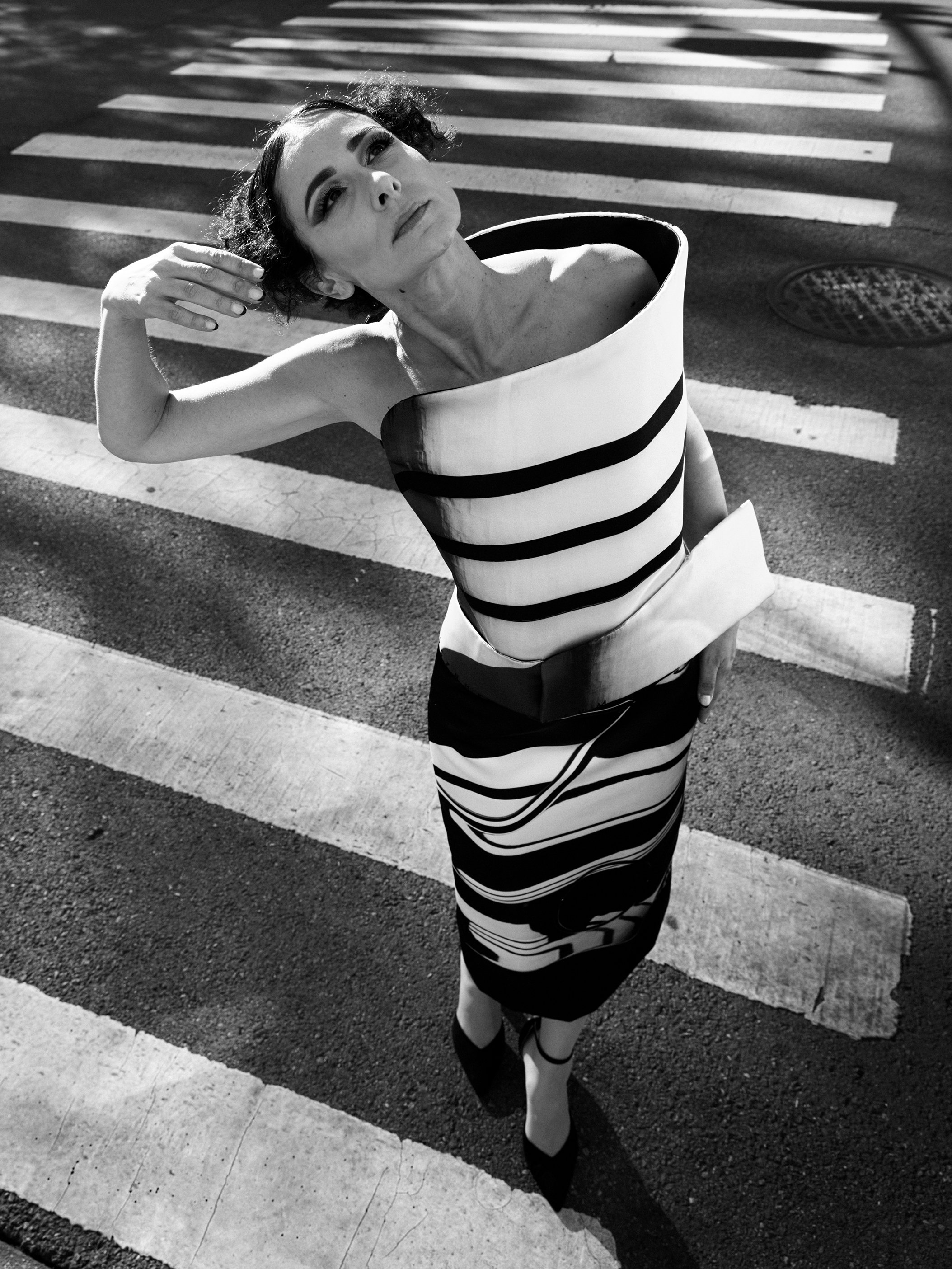
Couture returns to the city as motion.
Ziggura
Architecture translated into wearable anatomy
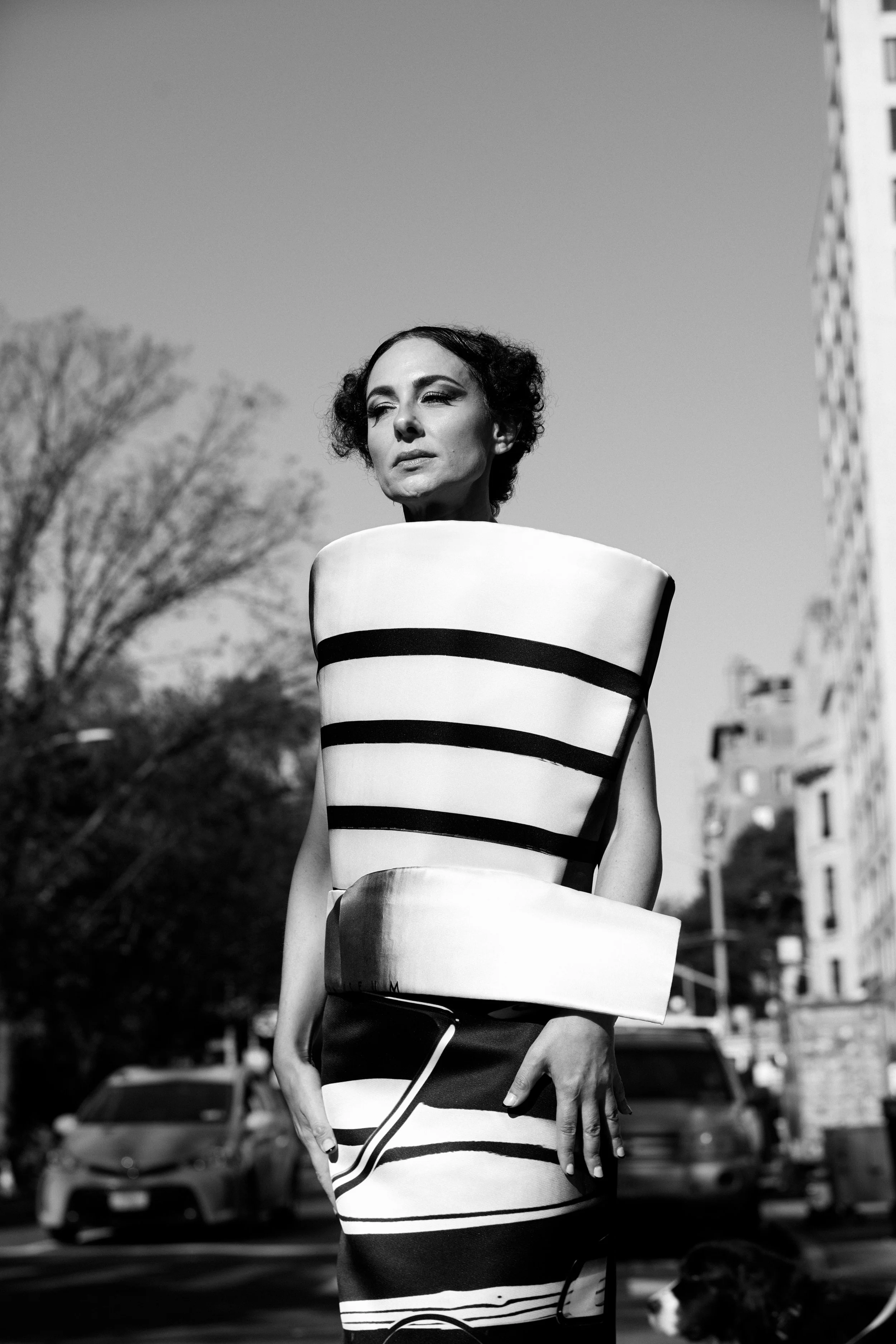
Frank Lloyd Wright drew inspiration from the ancient ziggurat, transforming the stepped Mesopotamian pyramid into a continuous spiral, a cone that opens outward rather than rising in tiers. Ziggura extends that gesture into couture; a wearable architecture that encircles the body, expanding around the torso rather than resting upon it.
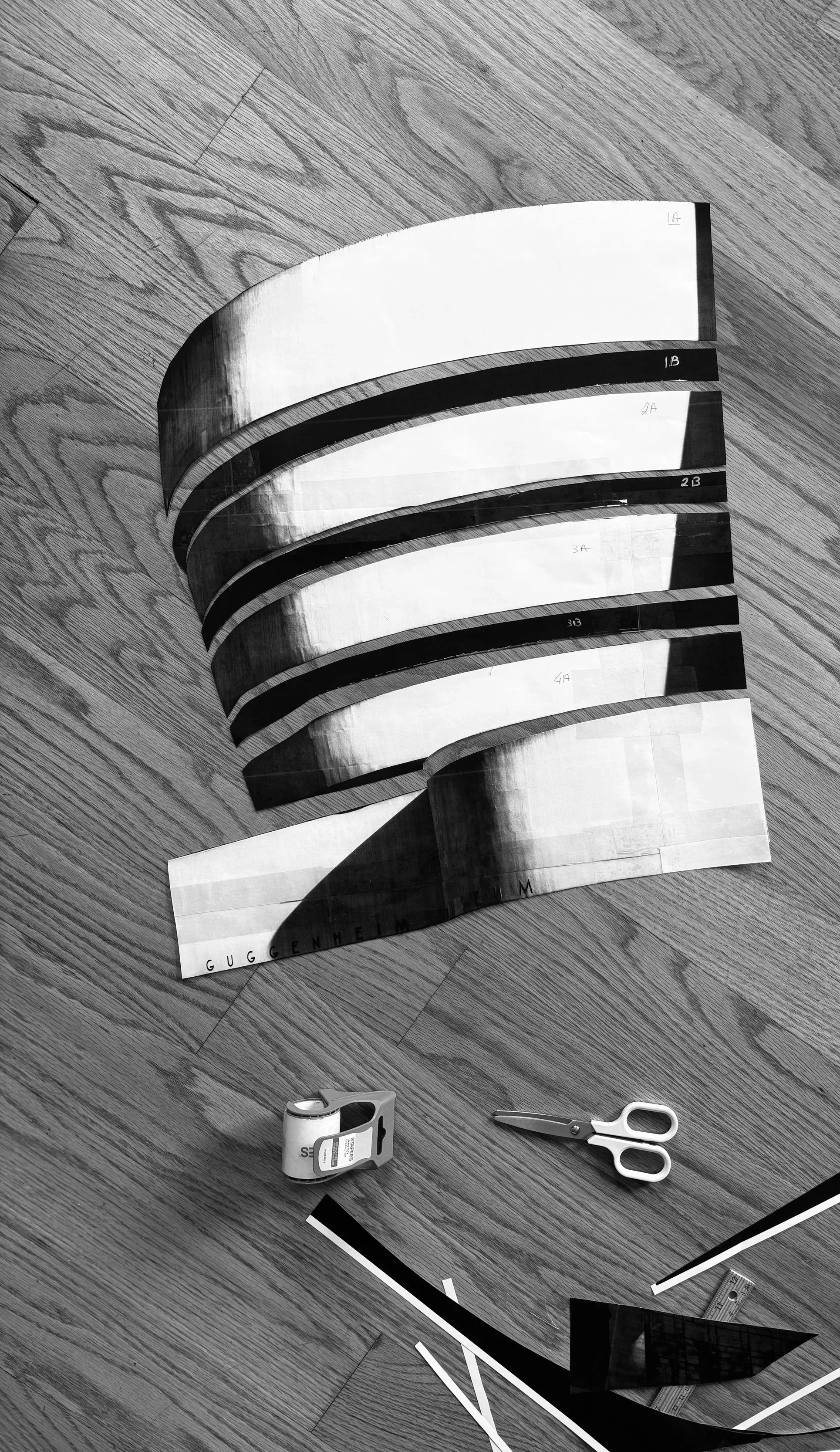
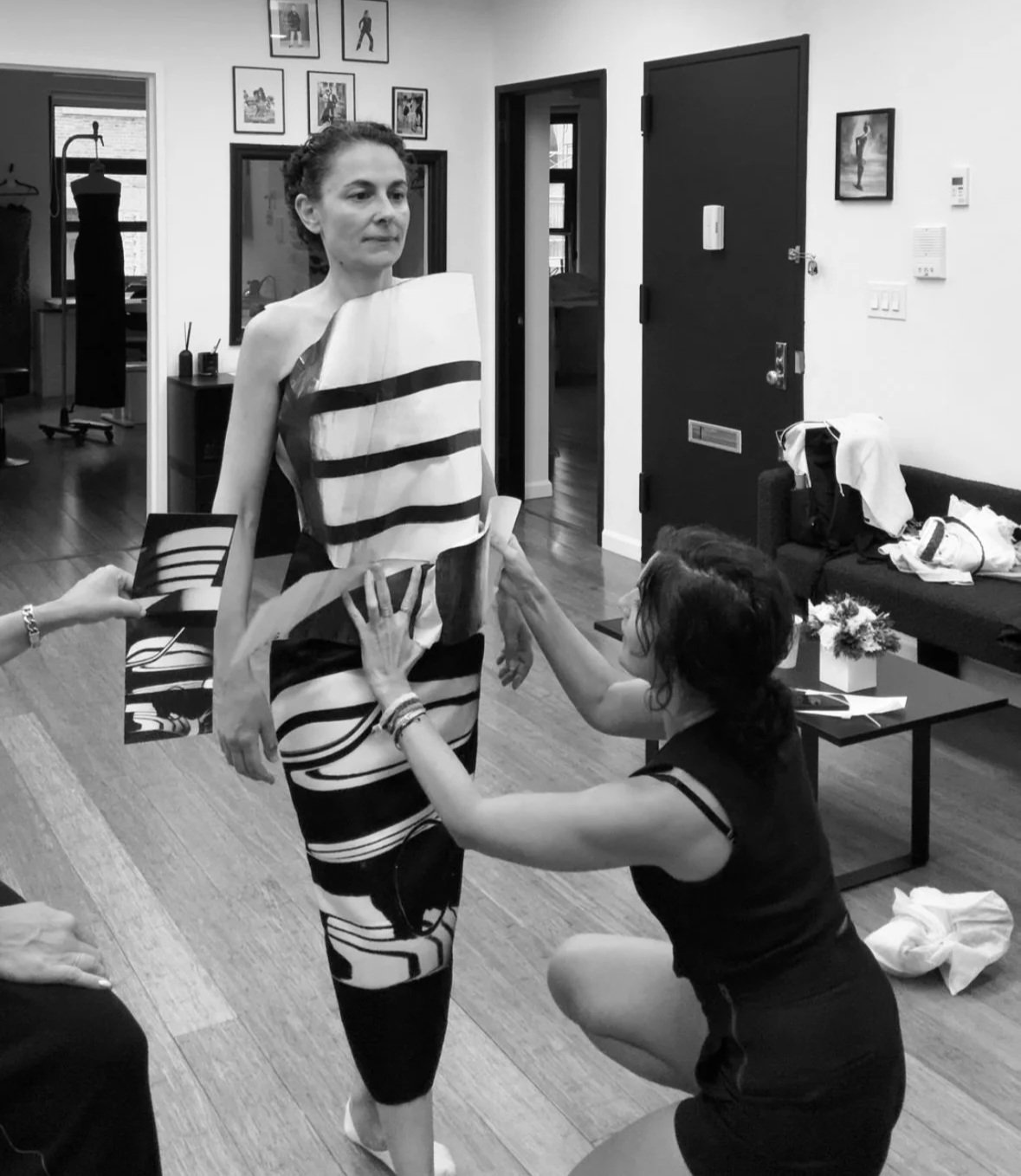
A photograph I took one fall afternoon, the cone illuminated by sharp sunlight, split by shadow from a neighboring facade, became the garment’s blueprint. What began as a flat image unfolded into volume, expanding from surface into form. The photograph dictated the pattern; the building’s anatomy became a wearable structure.
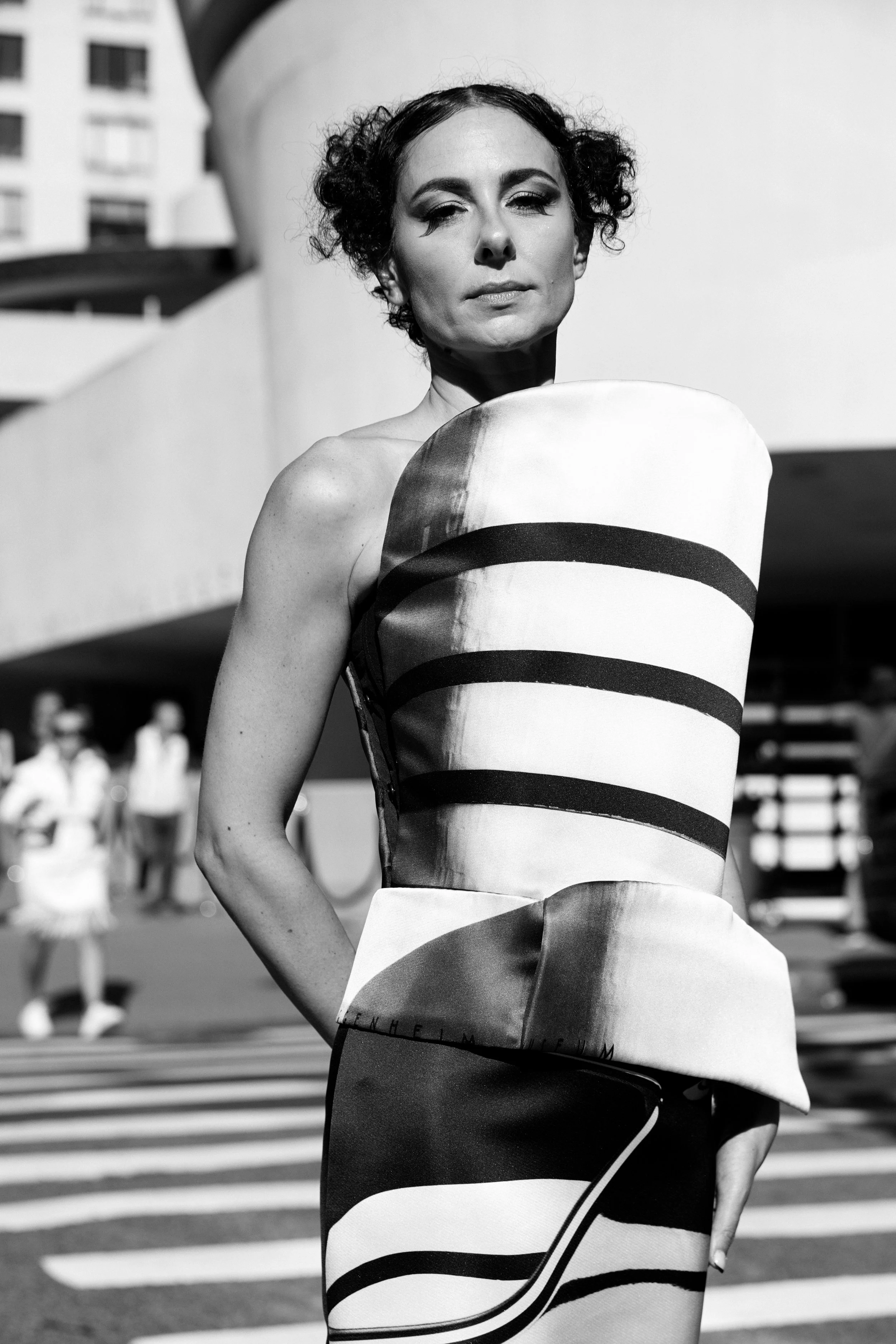
Wright’s devotion to the circle is felt everywhere. The museum rejects the rigidity of the square, allowing the spiral to unfold in uninterrupted motion, even the sidewalk outside echoes a circular rhythm. Vertical web walls act like ribs, suspending interior and exterior surfaces and holding the spiral in tension. Similarly, Ziggura, my wearable translation of Wright’s spiral, relies on a bustier beneath the outer garment to form its skeletal framework, anchoring its shell through snaps and hidden stitching. A single armhole opens like an architectural void, a negative space through which the body emerges, stabilizing the structure as it tightens around the upper arm.
Wright imagined the cone as flawless; a seamless geometry uninterrupted by construction. Yet beneath the painted Gunite (pneumatically applied concrete) surface, the rectangular structure persists, subtly revealing itself in bright sunlight. Ziggura mirrors this tension between ideal and reality; boning and foam create an inner architecture that disappears into a poly-satin exterior, achieving a curve so uninterrupted it feels almost impossible, a couture interpretation of Wright’s pursuit of perfection.
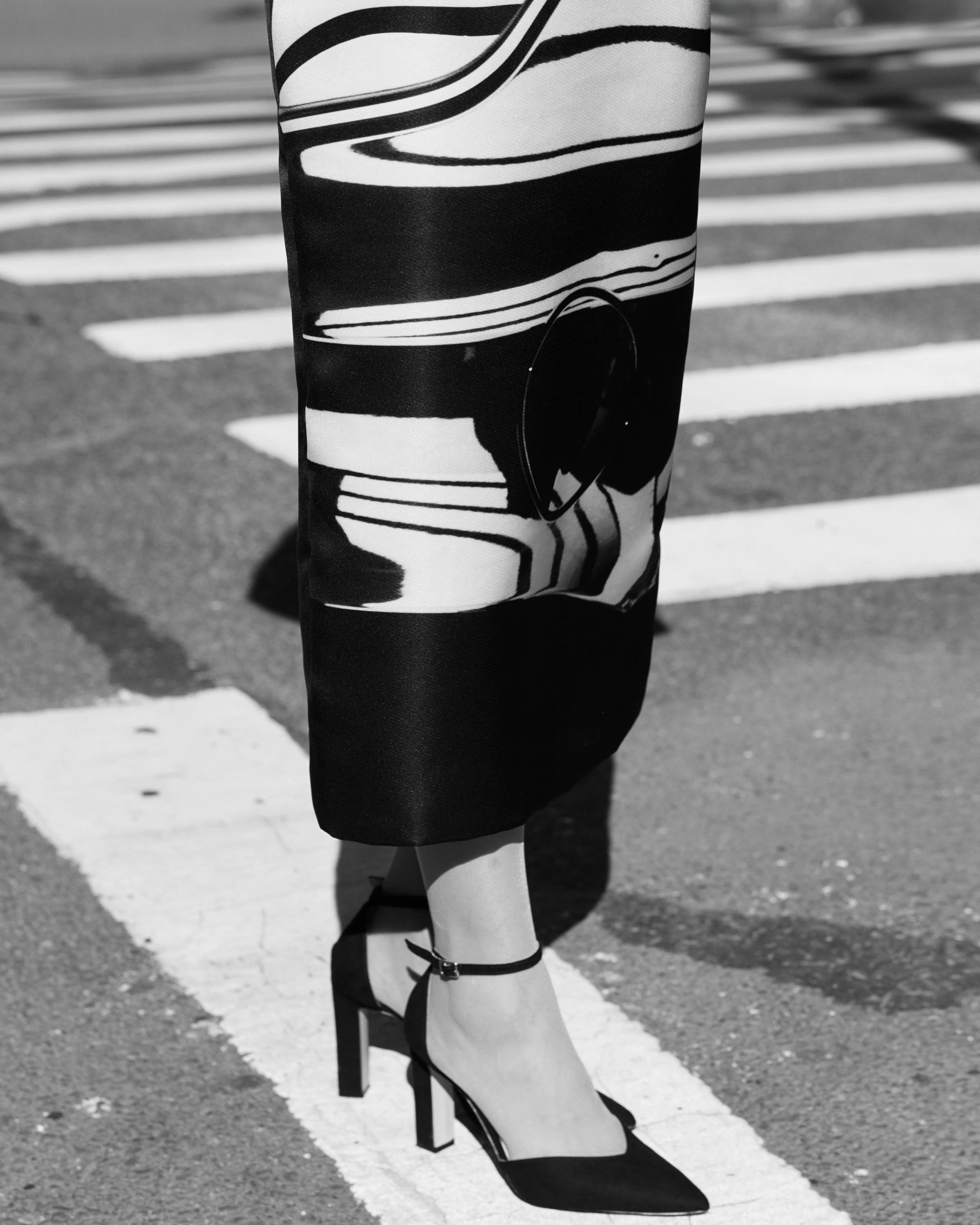
Beyond the building itself, what captivated me were its distorted reflections on the metal bodies of parked cars across the street. The spiral fractured across passing steel, bending like an Anish Kapoor mirror. From that distortion, the skirt emerged; a fragmented spiral translated into motion, where reflection replaced structure and the cone dissolved into rhythm. What had been solid architecture became fluid, an echo of the building carried by movement rather than gravity.
On the day of the shoot, the sun burned brightly as I transformed inside a small tent in Central Park. Wearing Ziggura felt both grounding and expansive. The building rising behind me as if witnessing another rebirth nearly seventy years after its opening. The Guggenheim has always inspired more than just architects. Months after Solomon R. Guggenheim Museum opened its doors in 1959, photographer Tony Vaccaro captured a playful image of a woman modeling a hat nearly identical to Wright’s design. Decades later, I found myself embodying another interpretation, architecture translated through body and motion.
The photographs and cinematic footage presented here were intentionally adjusted to limit direct exposure of the building after museum authorities expressed discomfort with it being shown alongside the couture interpretation. That hesitation raises a broader question: when architecture enters photographic imagination, who defines its meaning?
In that moment, photography did more than record the encounter; it created the perception through which two constructs, a building and a couture form, could exist within the same anatomy of vision.
In her writings on photography, Susan Sontag described the camera as a tool that frames and reinterprets reality rather than simply recording it. Institutions often try to control how their images are seen, yet photography resists fixed meaning.
When architecture becomes a photograph, the photograph becomes a garment, and the garment returns as an image alongside the architecture, authorship shifts - not away from the original structure, but into a cultural dialogue with it.
Wright once reimagined the ancient ziggurat in brick and Gunite, transforming a stepped monument into a living spiral that challenged how architecture could move through space. Ziggura continues that lineage of reinterpretation, not as imitation, but as translation. The building’s anatomy becomes a wearable structure; its ribs, voids, and circulation shift from concrete into fabric, from permanence into motion.
Does transforming architecture into wearable form critique the building, or extend its presence? Perhaps this is the true life of architecture: not to remain fixed, but to evolve through those who engage with it. Wright interpreted the past to shape the future; Ziggura interprets Wright, allowing the spiral to circulate through body and time. Here, architecture breathes, not as a monument, but as a living anatomy carried forward through wearable art.
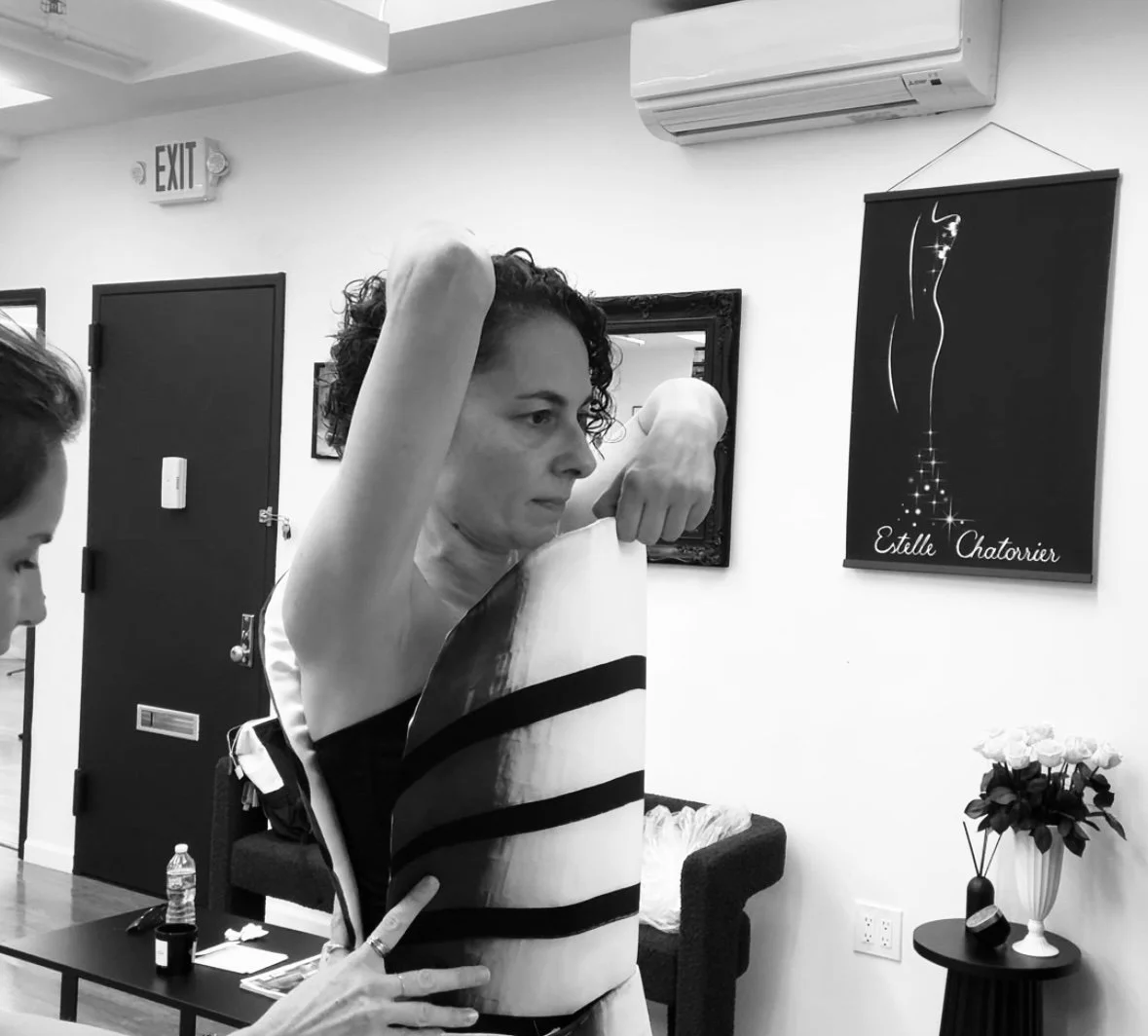
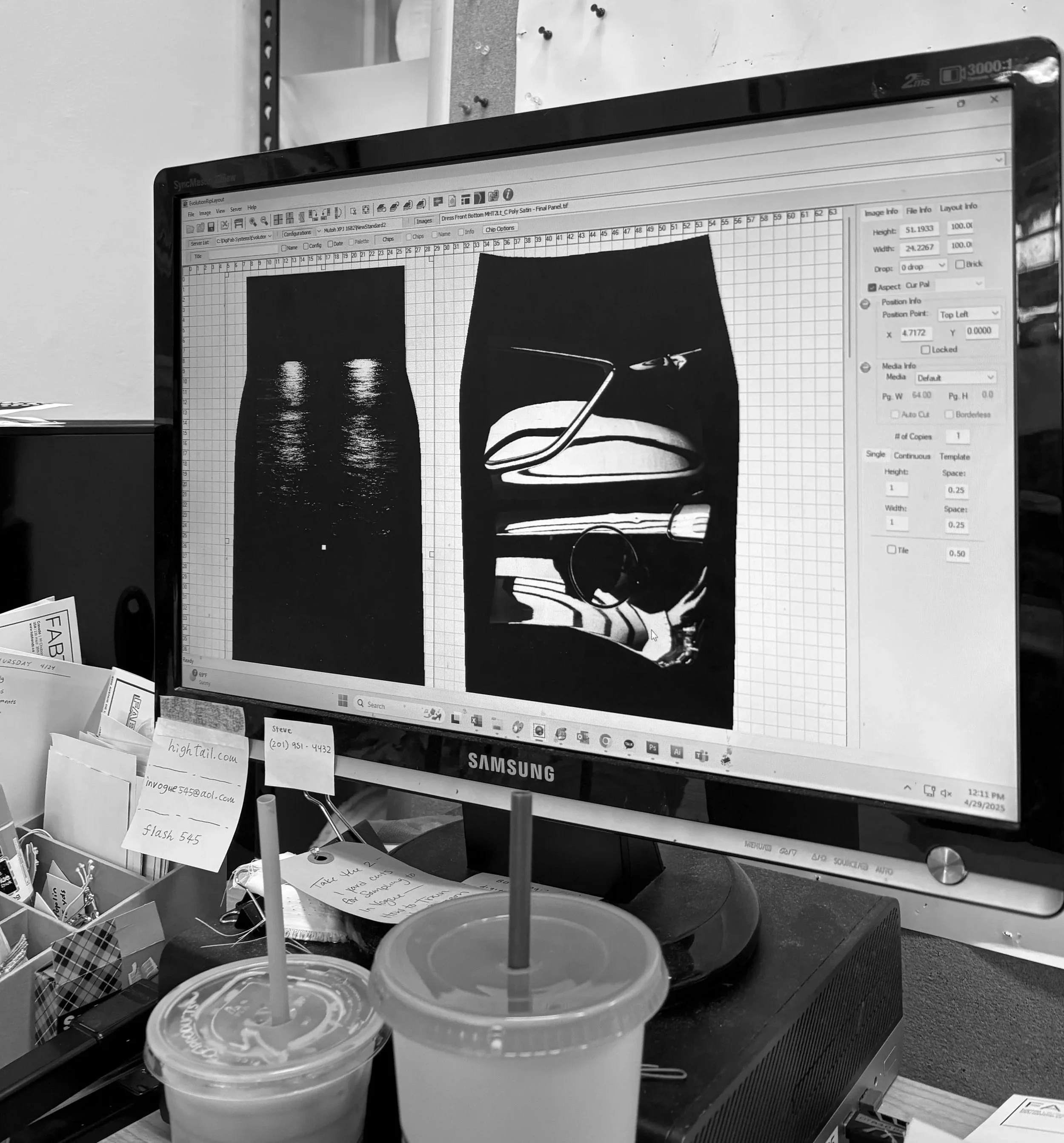
The transformation from photograph into a constructed wearable architecture that brings the image into motion.